Configuring SKUs for Microsoft Purview Data Governance

Configuring SKUs for Microsoft Purview Data Governance

Synapse

by Erwin | Jan 19, 2025

In my previous blog I explained that Microsoft Purview for Data Governance has a new pricing model, in this blog we will dive a bit deeper on how you set the different SKU's

Microsoft Purview offers a comprehensive data governance solution that helps organizations manage, protect, and understand their data across various environments. One crucial aspect of optimizing Purview's performance is configuring the appropriate SKUs  for different tasks, especially for Data Quality (DQ) jobs within Data Health Management. This blog post will guide you through the process of selecting and configuring SKUs to enhance your data governance experience.

Understanding SKUs in Microsoft Purview

SKUs in Microsoft Purview determine the level of resources allocated to your data governance tasks. Higher SKUs provide more processing power, which can significantly speed up data quality jobs, especially those with high data volumes, complex rules, or frequent scans.

How can I set my SKU?

In Purview select the Settings tab followed by the Unified Catalog

Purview_SkU

Select the the Usage Settings to get to see the following option:

Now you can set the SKU Type

  • Data Health Management:
    • Basic: €14.40 per Data Governance Processing Unit
    • Standard: €57.57 per Data Governance Processing Unit
    • Advanced: €230.28 per Data Governance Processing Unit

Steps to Configure SKUs for Data Quality Jobs

  1. Access Data Quality Monitoring:
    • Use the Data Quality Monitoring functionality within Microsoft Purview to view and understand your data quality jobs. This tool provides insights into the performance and status of your DQ jobs, helping you identify areas that may benefit from higher SKUs.
  2. Select Higher SKUs for Faster Processing:
    • For jobs with high data volumes, complex rules, or very frequent DQ scans, consider selecting a higher SKU. Higher SKUs allocate more resources, resulting in faster processing times and more efficient data quality management.
  3. Understand the Impact on Your Bill:
    • Before upgrading to a higher SKU, it's essential to understand the impact on your bill. Navigate to your billing section in the Azure portal, ensuring you have the required permissions to view and manage billing information. Higher SKUs will incur additional costs, so it's crucial to balance performance needs with budget considerations.
  4. Correlate with Your Consumption Report:
    • Review your consumption report to understand how different SKUs affect your overall usage and costs. This report provides detailed insights into your resource consumption, helping you make informed decisions about SKU selection.

Additional Tips for Data Health Management

  • Upgrade SKU for Faster Processing: Regularly assess your data quality jobs and upgrade SKUs as needed to maintain optimal performance.
  • Data Quality Management: Start with the basic SKU for initial setups and gradually move to higher SKUs as your data governance needs grow.
  • Governance Health Controls: Implement governance health controls to monitor and resolve issues proactively.
  • Actions and Resolutions: Use self-serve analytics and reports to take informed actions and resolve data quality issues efficiently.

By carefully selecting and configuring SKUs, you can enhance the performance of your data quality jobs within Microsoft Purview, ensuring a robust and efficient data governance framework.

Conclusion

Configuring the appropriate SKUs for Microsoft Purview Data Governance is essential for optimizing the performance of your data quality jobs. By understanding the different SKUs available and how to set them, you can ensure that your data governance tasks are handled efficiently and effectively. Regularly monitoring your data quality jobs and adjusting SKUs as needed will help maintain optimal performance and manage costs effectively.

By leveraging the insights provided by Data Quality Monitoring and correlating your consumption reports, you can make informed decisions about SKU selection. This proactive approach will enable you to maintain a robust and efficient data governance framework, ensuring that your organization can manage, protect, and understand its data across various environments.

Let me know your thoughts

Useful Links:

Microsoft Purview Data Catalog

Microsoft Purview Data Catalog billing consent

Microsoft Purview data governance pricing concepts

Microsoft Purview data governance pricing announcement


Feel free to leave a comment

Configuring SKUs for Microsoft Purview Data Governance

Microsoft Purview’s new pricing model for Data Governance

Synapse

by Erwin | Jan 6, 2025

Microsoft Purview’s New Pay-As-You-Go Pricing Model for Data Governance

Starting January 6, 2025, Microsoft Purview is set to revolutionize its Data Governance capabilities with the introduction of a new pay-as-you-go pricing model. This change is designed to provide more flexibility and cost-efficiency for organizations managing their data governance needs.

What’s New?

The new pricing model is based on two key metrics:

  1. Number of Unique Governed Assets per Day: This metric counts the unique technical assets, such as tables, files, datasets, and reports, that are actively managed and curated within the Microsoft Purview Unified Catalog. Only assets associated with governance concepts, like data products or critical data elements, are considered governed assets.
  2. Data Governance Processing Units (DGPU) per Run: DGPUs are fully managed compute units used for running compute-heavy capabilities, such as data quality and data health management. Each DGPU represents 60 minutes of compute time, which can be run across varying sets of nodes based on the workload needs.

Why This Matters

This pay-as-you-go model allows organizations to scale their data governance efforts according to their specific needs and usage patterns. By only paying for the assets they actively govern and the compute resources they use, businesses can achieve greater cost efficiency and flexibility.

Understanding Data Governance Processing Units (DGPUs)

DGPUs are a crucial component of this new pricing model. They are designed to handle compute-intensive tasks within Microsoft Purview, such as:

  • Data Quality Management: Ensuring the accuracy, completeness, and reliability of data.
  • Data Health Management: Monitoring and maintaining the overall health of data assets.

Each DGPU provides 60 minutes of compute time, which can be distributed across different nodes depending on the specific requirements of the task. This flexibility allows organizations to efficiently manage their compute resources and optimize their data governance processes. DGPU is available in three different performance options: Basic, standard, and advanced. By default any data management rule or health control is run on the Basic SKU. A customer can switch SKU’s based on the speed of compute suitable for their organization.

Microsoft Purview Data Governance | Enterprise Data Catalog

Microsoft Purview Data Governance Enterprise Catalog is billed based on a single meter, the data catalog, which is initiated when customers govern unique data assets. Data assets such as tables, views, AI models, semantic models, and many others that are linked to governance concepts in the product, such as data products and critical data elements, are counted as governed assets. Assets collected in the Purview Data Map but not linked to governance concepts aren't counted as governed assets.

For example, if an organization has 500 tables, views, stored procedures, resource sets, and AI models in their data map, but only 200 unique governed assets in the data catalog, the monthly cost for 30 days would be €95.947 (without discounts). The 300 assets that aren't linked to data products or critical data elements aren't considered governed assets and therefore not counted. Data catalog managed assets are priced uniformly across regions. This pay-as-you-go model for a managed asset is prorated based on days governed within the monthly billing cycle.

Pricing Details 

  • Data Catalog:
    • Standard: €0.0159 per asset per day or ~€0.48 per month
  • Data Health Management:
    • Basic: €14.40 per Data Governance Processing Unit
    • Standard: €57.57 per Data Governance Processing Unit
    • Advanced: €230.28 per Data Governance Processing Unit

For example, if a customer runs 100 Data Management rules and controls in a single day, and each run produces 0.02 DGPU with the Basic SKU, then the total DGPU for that day would equal two DGPU, costing the customer €28.784. Pricing example is based on the US East pricing. Currently the Azure Price calculator is not updated yet.

In  the cost analysis in Azure you will see now 2 new meters:

Service Name:

Microsoft Purview

Meters:

Data Management Basic Data Governance Processing Unit
Data Catalog Standard Asset

Oh yeah finally Azure Purview has now been renamed to Microsoft Purview.

Microsoft Purview Billing Overview

Getting Started

To take advantage of this new pricing model, organizations need an Azure subscription and an Azure resource group within the same tenant as Microsoft Purview. If these resources are already in place for other purposes, they can be utilized for Microsoft Purview as well.

Consent

Make sure you have consent to the new Billing Model more details can be found here.

Conclusion

Microsoft Purview’s new pay-as-you-go pricing model is a significant step forward in making data governance more accessible and cost-effective. By aligning costs with actual usage, organizations can better manage their data governance expenses while ensuring robust data management practices.

Stay tuned for more updates and detailed pricing information as we approach the launch date! After the launch I will get back to with some more Pricing Examples.

Useful Links:

Microsoft Purview Data Catalog

Microsoft Purview Data Catalog billing consent

Microsoft Purview data governance pricing concepts

Microsoft Purview data governance pricing announcement

Feel free to leave a comment

How to Discover and Govern Your Data with Microsoft Purview and Microsoft Fabric

How to Discover and Govern Your Data with Microsoft Purview and Microsoft Fabric

Synapse

by Erwin | Nov 29, 2023

How Microsoft Purview and Microsoft Fabric work together to empower data discovery and governance

Microsoft Purview is a unified data governance service that helps you manage and govern your on-premises, multi-cloud, and software as a service (SaaS) data. Microsoft Fabric is a new cloud-based data platform that enables you to create, share, and collaborate on data-driven insights with your team. Together, Microsoft Purview and Microsoft Fabric offer a seamless integration that allows you to browse and search Fabric items, access metadata from Fabric items, and apply data policies and classifications to Fabric items.

New Portal Experience

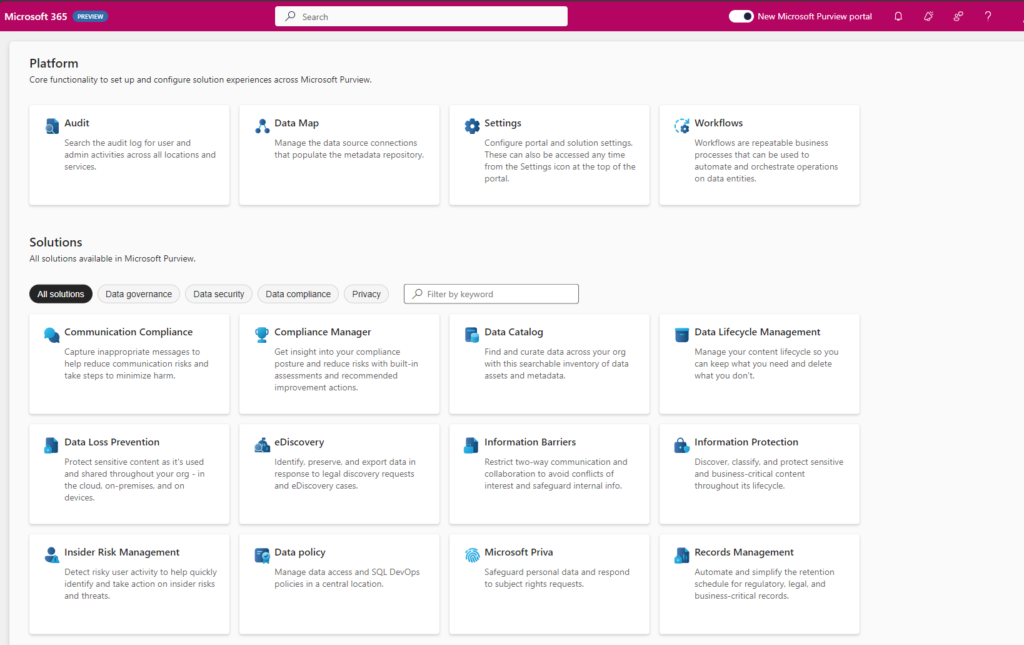
A few months ago, Microsoft announced the new portal Experience in Microsoft Purview as it offers a range of exciting new features and capabilities. Data Governance, Risk and Compliance are increasingly integrating into a unified experience. Microsoft Fabric will have a native integration with Microsoft Purview.

Purvew-New-Portal

Browse and search Fabric items

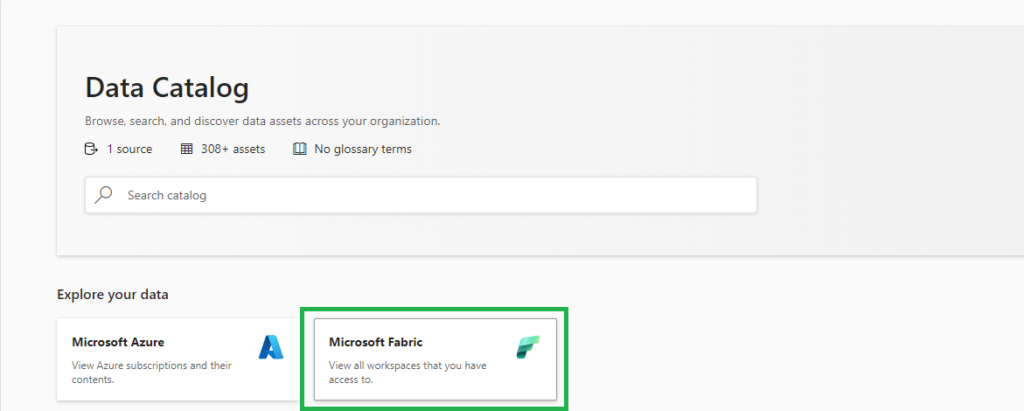
Just like Microsoft Azure, Microsoft Fabric is a new source for Microsoft Purview. Since Microsoft Purview is attached to every Fabric instance by default, you can click on the tile “Microsoft Fabric” on the front page of Microsoft Purview Data Catalog to start browsing your Fabric items. Automatically, any user can see the workspaces and Fabric items based on the permission setting they have in Fabric. You can also use the search bar to find Fabric items by keywords, filters, or facets.

Purview-Fabric-DataCatalog

Access metadata from Fabric items

In the coming weeks, Microsoft Purview Enterprise customers can provide broader access to metadata from Fabric items by scanning Fabric. When a Fabric is scanned, Microsoft Purview writes information about Fabric items to the Purview data map, and access to that metadata is governed by Microsoft Purview access control. This allows administrators to give users metadata access for data discovery or governance, without requiring those users to have read permissions on the underlying data sources.

Purview-Integration0Fabric

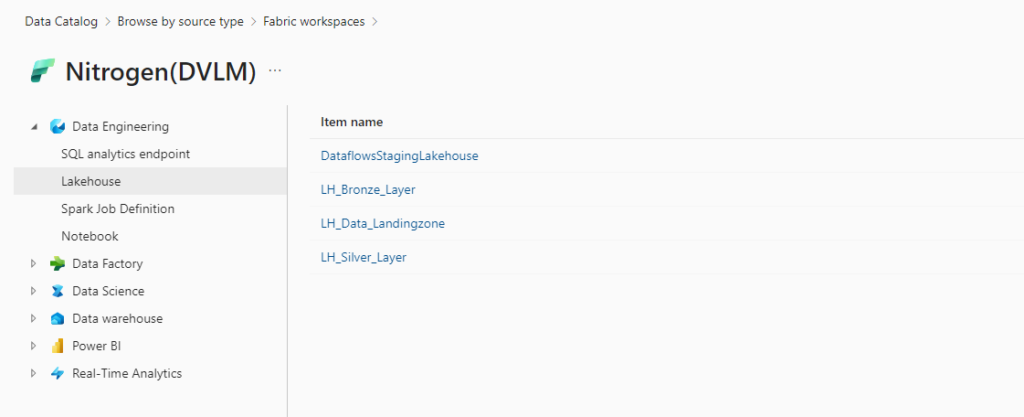
Live view in Microsoft Purview

Resources in live view in the Microsoft Purview Data Catalog automatically have this metadata available:

  • Name
  • Properties
  • Schema
  • Lineage

Creating a new workspace in Fabric will automatically appear in Microsoft Purview.

Purview-LiveView

Available resources

The following Fabric items will be available in Microsoft Purview as part of this public preview release.

Experiences Fabric items
Real-Time Analytics KQL Database
KQL Queryset
Data Science Experiment
ML Model
Data Factory Data pipeline
Dataflow Gen2
Data Engineering Lakehouse
Notebook
Spark Job Definition
SQL analytics endpoint
Data Warehouse Warehouse
Power BI Dashboard
Dataflow
Datamart
Dataset
Report
Paginated report*

* Only available by scanning

Conclusion

Microsoft Purview and Microsoft Fabric are two powerful services that work together to empower data discovery and governance. By integrating Microsoft Purview and Microsoft Fabric, you can leverage the benefits of both services, such as:

  • Browse and search Fabric items in the Microsoft Purview Data Catalog
  • Access metadata from Fabric items without requiring data access permissions

If you want to learn more about Microsoft Purview and Microsoft Fabric, you can visit the following links:

I hope you find this blog post helpful. Please let me know if you have any feedback or questions.

Feel free to leave a comment

Microsoft Purview new Experience is coming

Microsoft Purview new Experience is coming

Synapse

by Erwin | Jun 28, 2023

Get ready for the next enhancement in Microsoft Purview

Get ready for the next enhancement in Microsoft Purview, as it brings a range of exciting new features and capabilities. To ensure the best experience with Purview, it is recommended that you tag your existing Microsoft Purview accounts appropriately.

Mark your Purview accounts with the proper tags

In short, mark each Purview account with the following tags: Name: "Purview Environment," Value: "Production."

In the long story, you have several tag options available to you. The table below outlines the different tags and their purposes:

In all purposes the tag name is "Purview Environment"

Production - This tag signifies that the account is or will be used for cataloging and governance requirements in a production environment. It is a candidate to be selected as the primary account for the tenant.

Pre-production - This tag indicates that the account is or will be used to validate cataloging and governance requirements before making them available in production. It is a candidate to be merged as a domain or can be deleted.

Test - This tag suggests that the account is or will be used for testing capabilities in Microsoft Purview Governance. It is a candidate to be merged as a domain or can be deleted.

Dev - This tag signifies that the account is or will be used to test capabilities or develop custom code and scripts in Microsoft Purview Governance. It is a candidate to be merged as a domain or can be deleted.

Proof Of Concept - This tag indicates that the account is or will be used to test capabilities or develop custom code and scripts in Microsoft Purview Governance. It can be deleted in the future.

Deprecate - This tag is for accounts that were created a while back but are not in use today. They can be deleted in the future.

Create tag

The following instructions will allow you to successfully tag your Purview account(s) with the desired classification:
1. Sign in to the Azure portal using your Azure account credentials.
2. Use the search bar to find and select your Microsoft Purview account.
3. Locate the Tags (edit) section on the left of the Purview account overview page.
4. Click on the Tags (edit) link to open the tags editor.
5. Add a new tag with a Name and Value according to the provided options (e.g., Name: "Purview Environment," Value: "Production").
6. Click on Save to apply the tag to your Purview account.

What's Next!

The next Microsoft Purview enhancement is coming to you in a few weeks. Along with the features you've enjoyed with Microsoft Purview so far, this enhancement will provide these additional capabilities:
Centralized organization-wide data governance that automatically gives you visibility across your Microsoft Cloud.
Configuration and set up is no longer required to capture metadata for Microsoft Cloud - Microsoft Purview is auto-attached to Microsoft Fabric and Azure SQL.
A clean, crisp, and more intuitive user interface to navigate the platform and apps.
These new features will be turned on automatically and added to your existing capabilities.

How can you use our new experience?

These new features will be turned on automatically and seamlessly integrated with your existing capabilities. The new experience will be available once your organization has been enabled. The exact steps to get started will depend on your organization's current structure, and more information will be provided in the coming weeks.

Follow one of these guides below:

More information will be available in the coming weeks.

You can learn more about the enhancements by going to https://learn.microsoft.com/azure/purview/account-upgrades.
I'm looking forward to new the experience with hopefully an even better integration with Microsoft Fabric.
If you have any further questions, feel free to ask them in the comments below.

Feel free to leave a comment

Custom comments in Azure Synapse Analytics

Custom comments in Azure Synapse Analytics

Synapse

by Erwin | May 16, 2023

Add custom comments to your Azure DevOps and Github commits

Finally

​Finally and secretly hidden, we can now add a Comment to our commits in Azure Synapse Analytics and Azure Data Factory to Azure Dev Ops.

How do you activate this custom comment option in your existing environment. Read below.

Existing environment

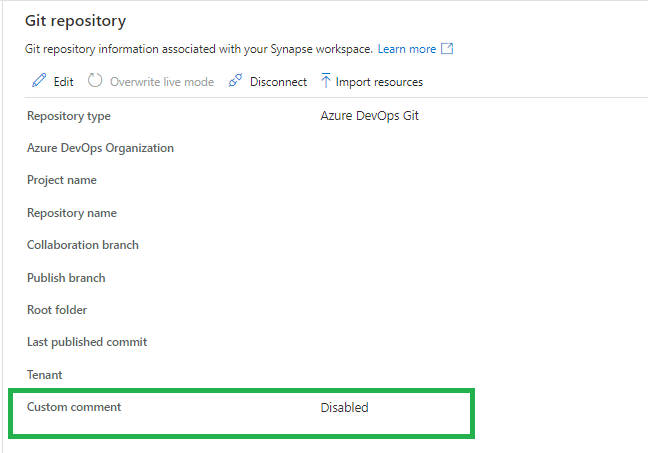
In Azure Synapse Analytics, go to the Git Configuration in the Management Activity Hub.

Synapse-overiview-custom-command

If the custom command is not enabled, you will see that this new feature is available.

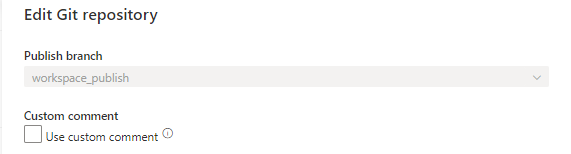
When you click on edit you can enable this new feature. Make sure you're are allowed to make changes to your current branch. Otherwise create a new feature and make the change in this feature before you merge(Pull request) it into your develop branch.

Enable-custom-command

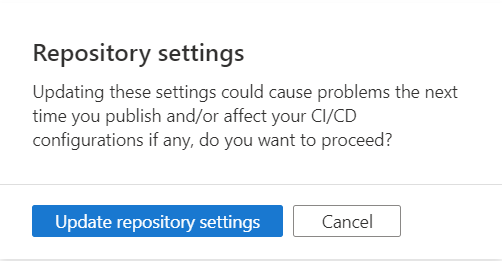
You will get a warning, this is mainly because you're updating a configuration file.

Update-repo-custom-comment

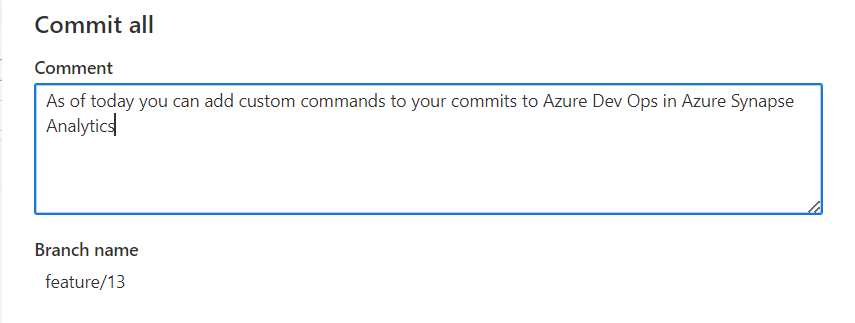
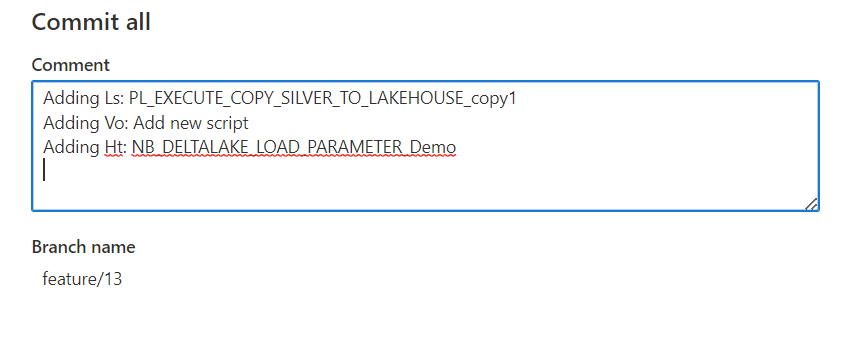
Once the option is enables, you will have the possibility to add a custom command on your commit. Which can be very useful.

add-custon-command-in-synapse

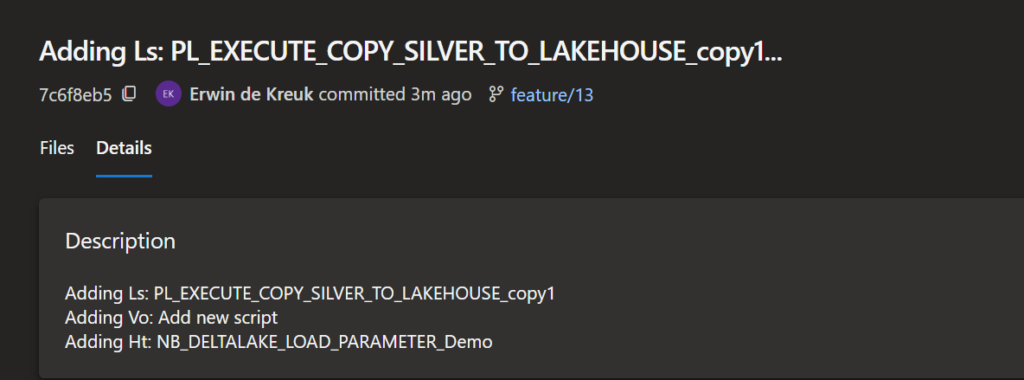
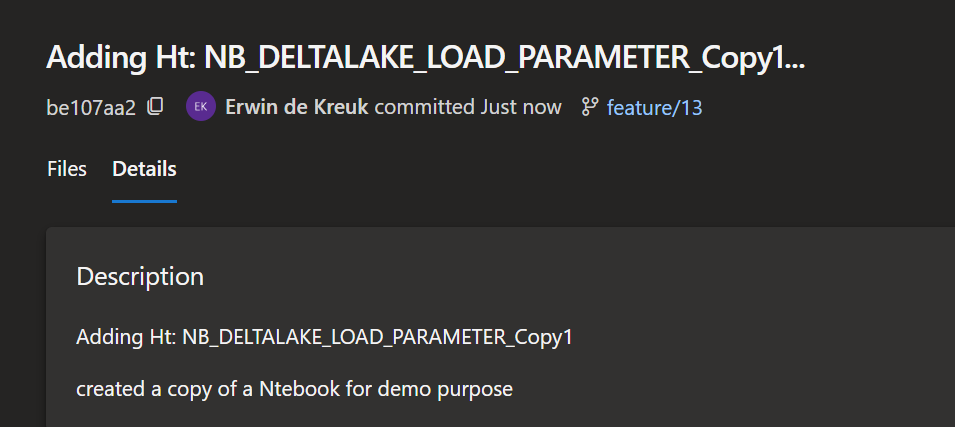
This message will be pushed to Azure DevOps as well and can be found on your commit, including the custom commands you added.

Overview-comments-in-DevOps

custom-command-synapse

New environment

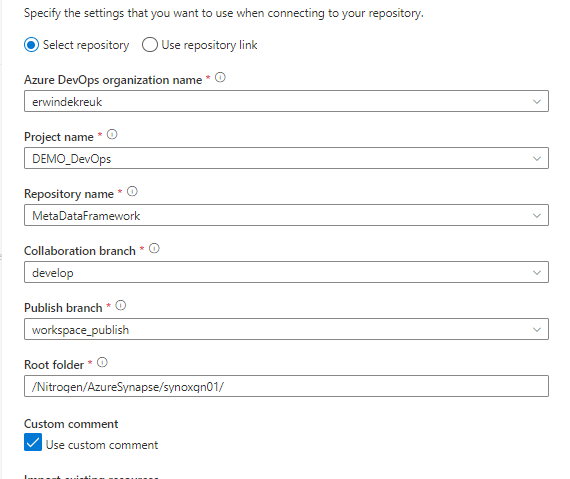
The new option is now also available when you connect Azure DevOps for the first time, just enable the option in the configuration pane.

custom-command-new-connection

Azure DevOps

You can enable this option also directly in Azure DevOps by adding the following option in enableGitComment":true  in de publish_config.json file, which is located in the root folder of you Azure Synapse repository.

Azure Data Factory

The above steps are working the same in Azure Data Factory

Github

Custom comments are also available in Github, works the same as Azure DevOps

Remarks

The custom comment option is only working when you apply the Commit All button, it is not working on a single artifact commit.

Have fun with it and let me now your findings!

It's a fairly simple process, but you just need to know it. And it will ultimately makes the collaboration with your team members much easier.

If you have any questions regarding the above, please let me know.

Documentation:

Source control in Synapse Studio

Feel free to leave a comment