This Saturday I've been speaking during Scottisch Summit 2021. It was my first Summit, but is was a great event, with more than 400 sessions covering the full Microsoft Stack in 7 different language English, Spanish, German, French, Italian, Portuguese and Polish. Proud that I was to able to join and to present.
Azure Data Factory
I presented a session on if there is a way that we can build our Azure Data Factory all with parameters based on MetaData?
In the beginning of my sessions the audio wasn't that well. I just double checked my uploaded recording and in there audio was fine.
This Saturday I've been speaking during DataSaturday #1 Pordenono. The first ever DataSaturday after Pass has retired. If you want to visit more Datasaturday events please visit the Data Saturdays event page.
Azure Purview
I presented a session about Azure Purview Microsoft's answer to Data Governance and Data Lineage
Scale your Dedicated SQL Pool in Azure Synapse Analytics
In my previous article, I explained how you can Pause and Resume your Dedicated SQL Pool with a Pipeline in Azure Synapse Analytics. In this article I will explain how to scale up and down a SQL Pool via a Pipeline in Azure Synapse Analytics. This is actually a necessary functionality during your Data Movement Solutions. In this way you can optimize costs.
The Pipeline can be added before and after your Nightly Run.
As a quick resume from the previous article, a SQL Pool can have different statuses:
Pausing: SQL Pool is Pausing and we cannot change the status.
Resuming: SQL Pool is Resuming, the SQL Pool starting and during this process and we cannot change the status.
Scaling: SQL Pool is Scaling, the SQL Pool is scaling to a different compute level and during this process we cannot change the status.
Paused: SQLPool is Paused, we can now change the status.
Online: SQLPool is Online, we can now change the status.
To allow the Synapse workspace to call the REST API we need to give the Synapse workspace access to the SQL Pool. In the Access control (IAM) of the SQL Pool assign the contributor role to your Synapse Workspace.
Build Pipeline
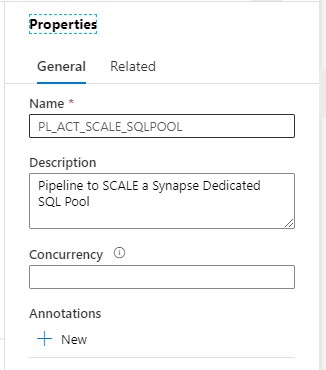
Clone the Pipeline PL_ACT_RESUME_SQLPOOL and rename it to PL_ACT_SCALE_SQLPOOL.
Change the description of the Pipeline, 'Pipeline to SCALE a Synapse Dedicated SQL Pool'
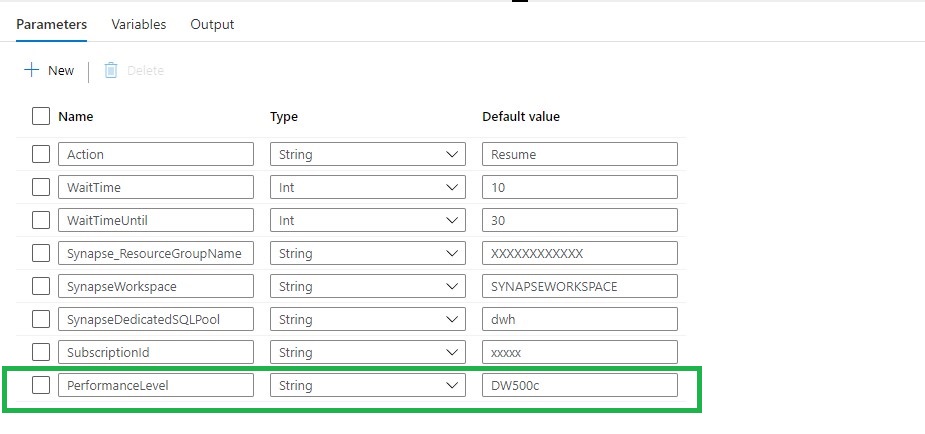
Add the PerformanceLevel parameter to the Parameters of the Pipeline:
Action: RESUME(Leave this on RESUME, if we want to SCALE the SQL Pool must be Online)
WaitTime: Wait time in seconds before the Pipeline will finish
WaitTimeUntil: Wait time in seconds for the retry process
Synapse_ResourceGroupName: Name of the ResourceGroup of the used Synapse Workspace
SynapseWorkspace: SynapseWorkspace
SynapseDedicatedSQLPool: Name of the dedicated SQL Pool
SubsriptionId: SubscriptionId of Synapse Workspace
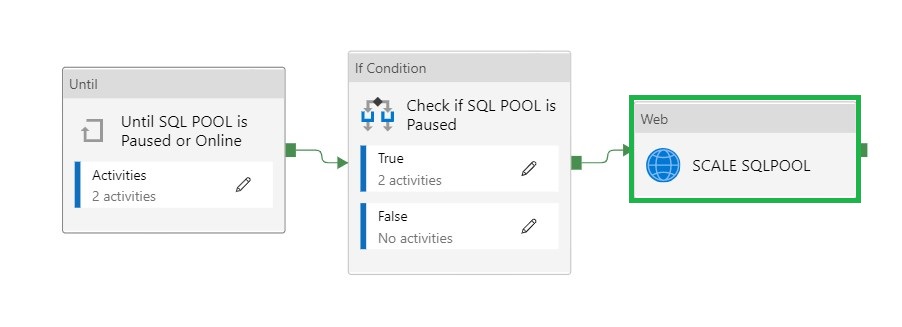
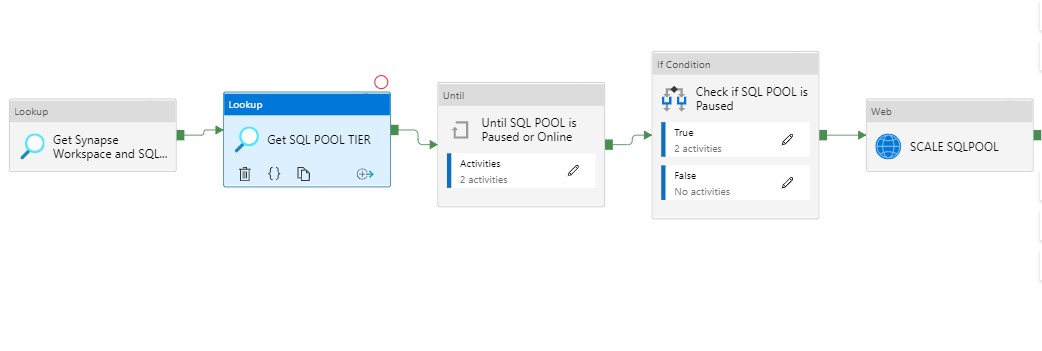
We leave the first two activities as is. The Pipeline can only continue when the status is Paused or Online and not one of the other statuses. When the SQL Pool is Paused, the second activity will Resume the SQL Pool.
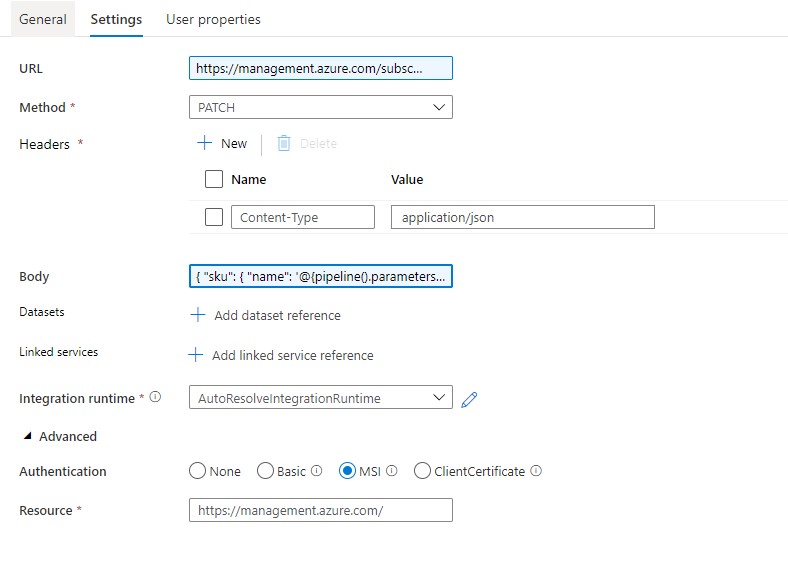
To Scale the SQL Pool we need add a new Web Activity.
Headers = Name = Content-Type Value= application/json
Body = { "sku": { "name": '@{pipeline().parameters.PerformanceLevel}' } }
Resource =https://management.azure.com/
Please feel free to download the Pipeline code here.
DAILY RUN
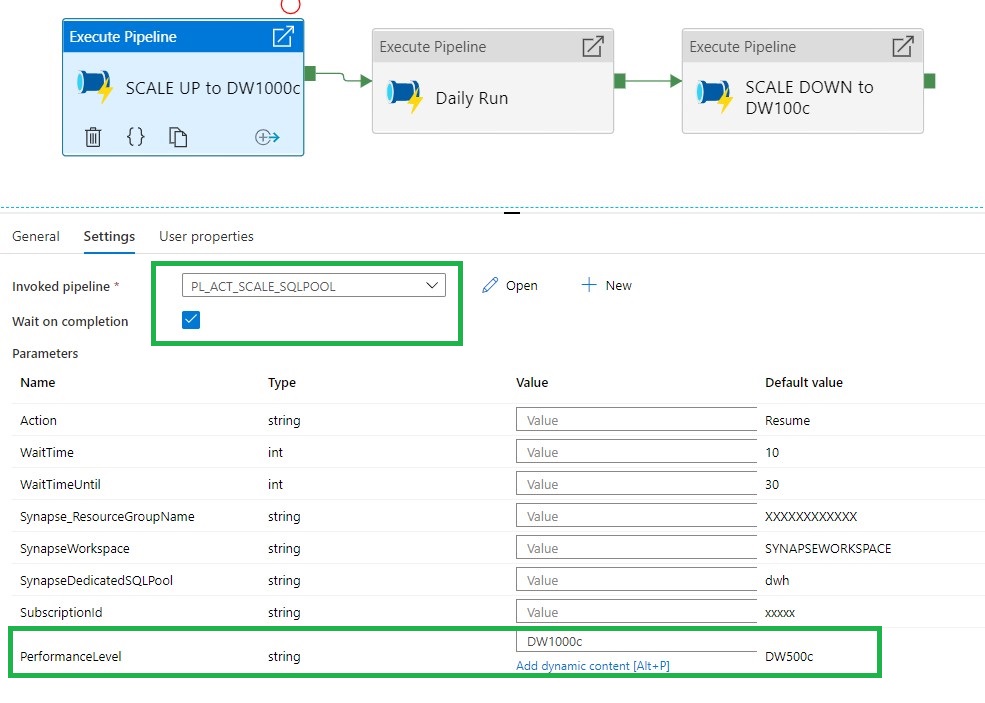
Add the above Pipeline as a Start Pipeline before your Daily run and Scale up to the desired Performance Level. When the Daily run is finished you Scale Down to a lower level or can you add the Pipeline to Pause the SQL Pool.
Metadata
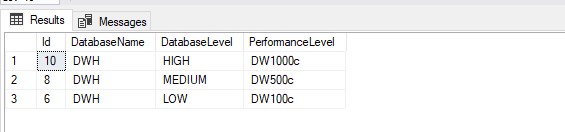
If you're already using a database where you store your Meta Data, you can create a table where you store the desired Performance Level The only thing you need to do is adding a Lookup Activity to get the parameters from your database and replace the parameters with the output from the lookup activity.
[sql]
CREATE TABLE [configuration].[Database_Level](
[Id] [int] IDENTITY(1,1) NOT NULL,
[DatabaseName] [varchar](30) NULL,
[DatabaseLevel] [varchar](10) NOT NULL,
[PerformanceLevel] [varchar](10) NOT NULL,
CONSTRAINT [PK_Pipeline_ExecutionLog] PRIMARY KEY CLUSTERED
(
[Id] DESC
)WITH (STATISTICS_NORECOMPUTE = OFF, IGNORE_DUP_KEY = OFF, OPTIMIZE_FOR_SEQUENTIAL_KEY = OFF) ON [PRIMARY]
) ON [PRIMARY]

[/sql]
A SQL Pool(Former SQL DW)
A SQL Pool(Former SQL DW) linked to a SQL (Logical) Server has a slightly different approach.
Use the settings below to create a Pipeline to Scale the SQL Pool.
Action: RESUME
WaitTime: Wait time in seconds before the Pipeline will finish
WaitTimeUntil: Wait time in seconds for the retry process
SQLServer_ResourceGroupName: Name of the ResourceGroup of the used SQL(Logical) Server
SQLServer: SQL(Logical) Server name
SQLServerDedicatedSQLPool: Name of the dedicated SQL Pool
SubsriptionId: SubscriptionId of Synapse Workspace
Pause or Resume your Dedicated SQL Pool in Azure Synapse Analytics
Azure Synapse Analytics went GA in beginning of December 2020, with Azure Synapse we can now also create a Dedicated SQL Pool(formerly Azure SQL DW). Please read this document to learn what a Dedicated SQL Pool is. This article describes how to Pause or Resume a SQL Pool within Azure Synapse Analytics. A SQL Pool(Former Azure SQL DW) linked to a SQL (Logical) Server has a slightly different approach.
A SQL Pool is a MPP Database (short for massively parallel processing) and has a different approach of loading data but also different kind of pricing. This are details for another Blogpost.
Pausing: SQL Pool is Pausing and we cannot change the status.
Resuming: SQL Pool is Resuming, the SQL Pool starting and during this process and we cannot change the status.
Scaling: SQL Pool is Scaling, the SQL Pool is scaling to a different compute level and during this process we cannot change the status.
Paused: SQLPool is Paused, we can now change the status.
Online: SQLPool is Online, we can now change the status.
To allow the Synapse workspace to call the REST API we need to give the Synapse workspace access to the SQL Pool. In the Access control (IAM) of the SQL Pool assign the contributor role to your Synapse Workspace.
Build Pipeline
Create a new Pipeline with the name PL_ACT_PAUSE_SQLPOOL
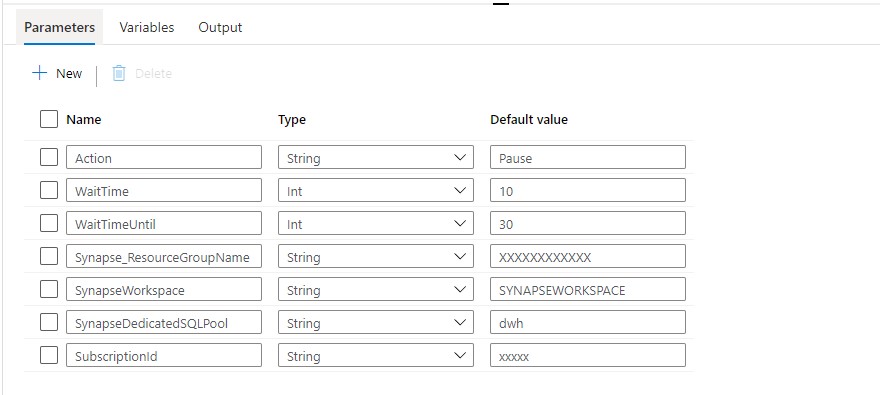
Add the following Parameters to the Pipeline:
Above are the generic Parameters used within the Pipeline.
Action: PAUSE or RESUME
WaitTime: Wait time in seconds before the Pipeline will finish
WaitTimeUntil: Wait time in seconds for the retry process
Synapse_ResourceGroupName: Name of the ResourceGroup of the used Synapse Workspace
SynapseWorkspace: SynapseWorkspace
SynapseDedicatedSQLPool: Name of the dedicated SQL Pool
SubsriptionId: SubscriptionId of Synapse Workspace
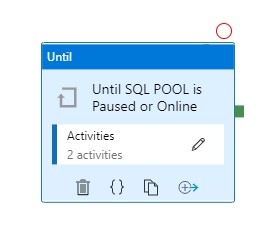
Until Activity
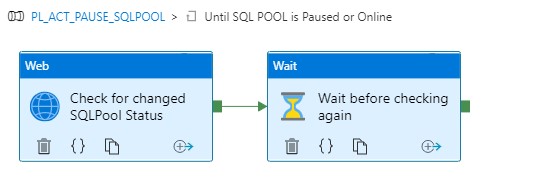
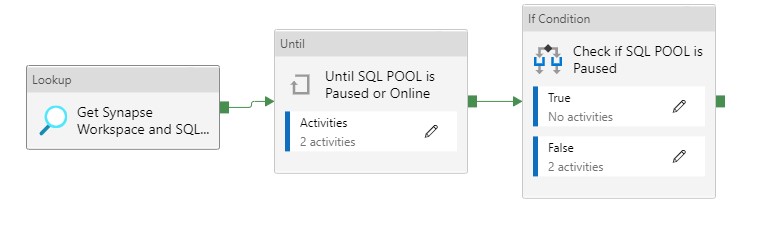
We can only change the status when the SQL Pool is Paused or Online That's why we need to add an Until activity to start the Pipeline. It executes a set of activities in a loop until the condition associated with the activity evaluates to true.
With this activity we can check the status of the SQL Pool and wait until it becomes Paused or Online. Let me explain how this works.
Web Activity
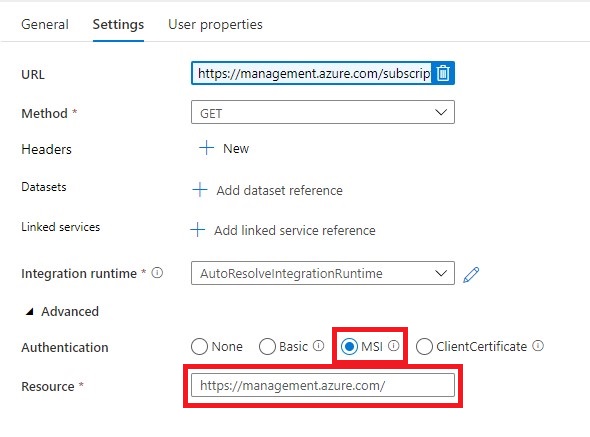
Within the Until Activity we need to create a new Web Activity. A Web Activity can be used to call a custom REST API endpoint from a Synapse Data pipeline.
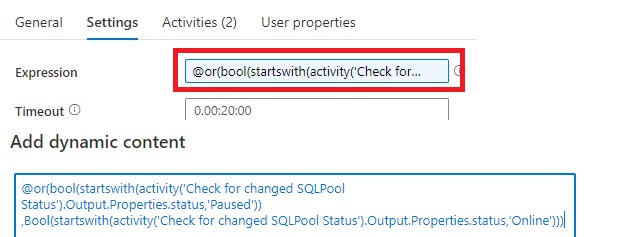
Once we have created the Web Activity, we can define the expression for the Until Activity.
The Pipeline can only continue when the status is Paused or Online and not one of the other statuses. That's the reason we need to add these 2 two statuses to check for.
Expression: @or(bool(startswith(activity('Check for changed SQLPool Status').Output.Properties.status,'Paused')),Bool(startswith(activity('Check for changed SQLPool Status').Output.Properties.status,'Online')))
Time out: 0.00:20:00
The Until Activity will only continue, when the status from the above Web Activity output is Paused or Online, this can take a while and we don't want to execute the Web Activity every time. That’s why we add a Wait Activity.
Wait Activity
A Wait Activity waits for the specified period of time before continuing with execution of subsequent activities. Within the Wait Activity add an expression from above parameters for Wait time seconds.
After the Web Activity, Azure Synapse waits in this case 30 seconds to check if the status has changed before it will check again.
Check for the SQL Pool Status
To check if the SQL Pool is paused, we’re adding an If Condition Activity (Name: Check if SQL POOL is Paused)
Add an Expression on the If Condition Activity@bool(startswith(activity('Check for changed SQLPool Status').Output.Properties.status,'Paused'))
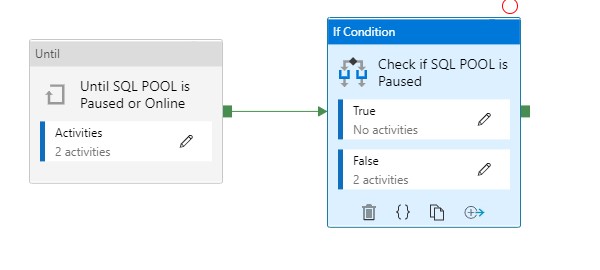
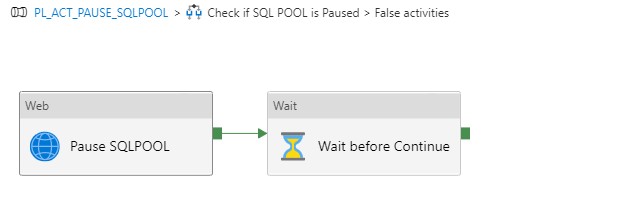
This expression will check if the SQL Pool is Paused or not. In this situation we want to Pause our SQL Pool, to Pause the SQL Pool we need to add as Activity for pausing(see below) to False. In case the SQL Pool is already Paused we do nothing(True).
The following settings are set for the Web Activity:
It is almost the same URL but we have to add the action option @{pipeline().parameters.Action}
Method = Post
Header = {"Nothing":"Nothing"}
Resource =https://management.azure.com/
Add a Wait Activity but this time with a different parameter @pipeline().parameters.WaitTime, the purpose of this activity is to wait a period before we start ingestion data(just to be sure the SQL Pool in online)
Create Pipeline to Resume your SQL Pool
Clone your PL_ACT_PAUSE_SQLPOOL and rename it to PL_ACT_RESUME_SQLPOOL. Change your action Parameter to "Online".
Within the IF Condition move the Web Activity Pause SQL Pool and the Wait Activity from False to True and rename to Resume SQL Pool.
You have now learned how to Pause and Resume your SQL Pool Dynamically with the use of Parameters. Both Pipelines can be easily transferred to different customers.
Please feel free to download the Pipeline code here
MetaData
If you're already using a database where you store your Meta Data, then you have also the possibility to store the necessary parameters in the database. The only thing you need to do is adding a Lookup Activity to get the parameters from your database(and replace the parameters with the output from the lookup activity)
A SQL Pool(Former SQL DW)
A SQL Pool(Former SQL DW) linked to a SQL (Logical) Server has a slightly different approach, use the settings below to create a Pipeline to Pause or Resume.
Action: PAUSE or RESUME
WaitTime: Wait time in seconds before the Pipeline will finish
WaitTimeUntil: Wait time in seconds for the retry process
SQLServer_ResourceGroupName: Name of the ResourceGroup of the used SQL(Logical) Server
SQLServer: SQL(Logical) Server name
SQLServerDedicatedSQLPool: Name of the dedicated SQL Pool
SubsriptionId: SubscriptionId of Synapse Workspace
To allow the Synapse workspace to call the REST API we need to give the Synapse workspace access to the SQL(Logical) Server. In the Access control (IAM) of the SQL(Logical) Server assign the SQL DB Contributor role to your Synapse Workspace.
Hopefully this article has helped you a step further. As always, if you have any questions, leave them in the comments.