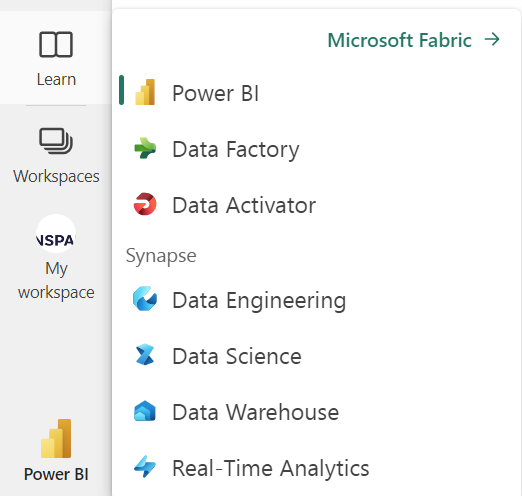
I got some questions from customers that didn’t know how to enable Microsoft Fabric and that they only see Power BI Items and not the new announced Experiences. In this short blog I will explain how you can easily enable Microsoft Fabric.
How to enable Fabric
If you want to try Fabric in your tenant, you need to enable the Fabric features in your Power BI admin portal.
To do, go to https://app.powerbi.com/.
Note:Â You must be an Power BI administrator
Please note that Microsoft FabricCapacity(Trial)or Power BI Premium Capacity is required to get started with Microsoft Fabric.
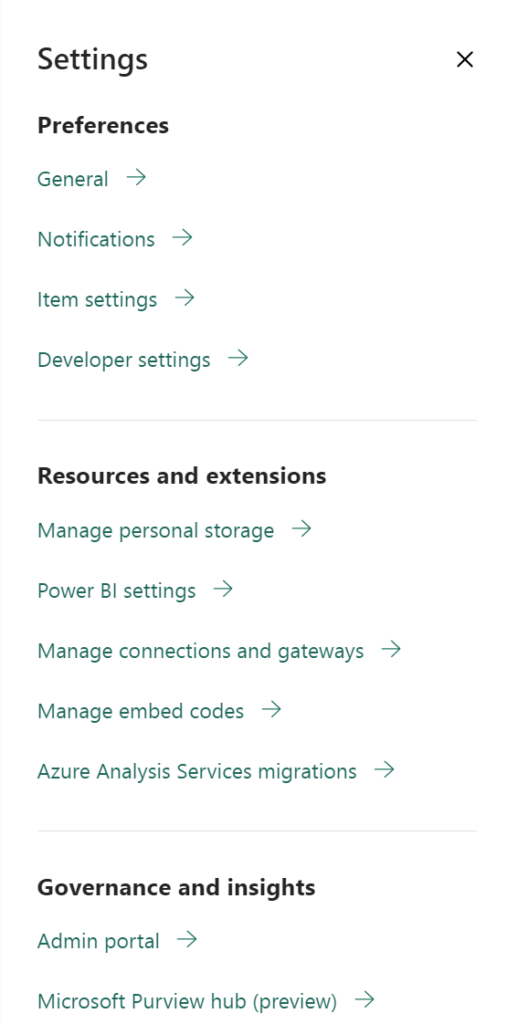
Open the Microsoft Fabric admin portal.
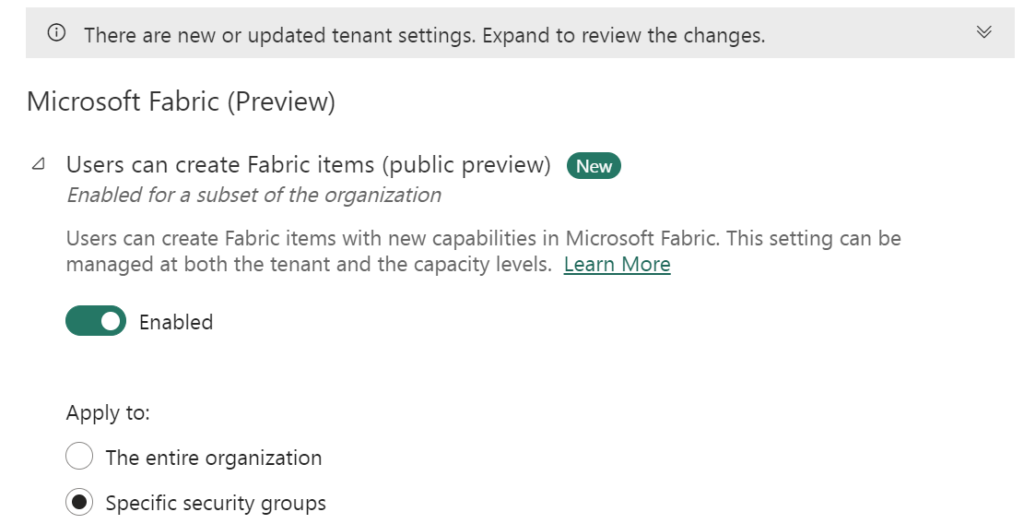
By default, Microsoft Fabric is disabled (if you do not change the setting, it will be set to ON after July 1st 2023).
You enable Microsoft Fabric for the whole organization or you can just start with a small group(Specify Security Groups). My advice is to start with a small group. Microsoft Fabric is in Public Preview and not ready for Production Environments.
It will take up to 15 minutes to deploy these setting, mostly much faster. After that the new experiences will be available.
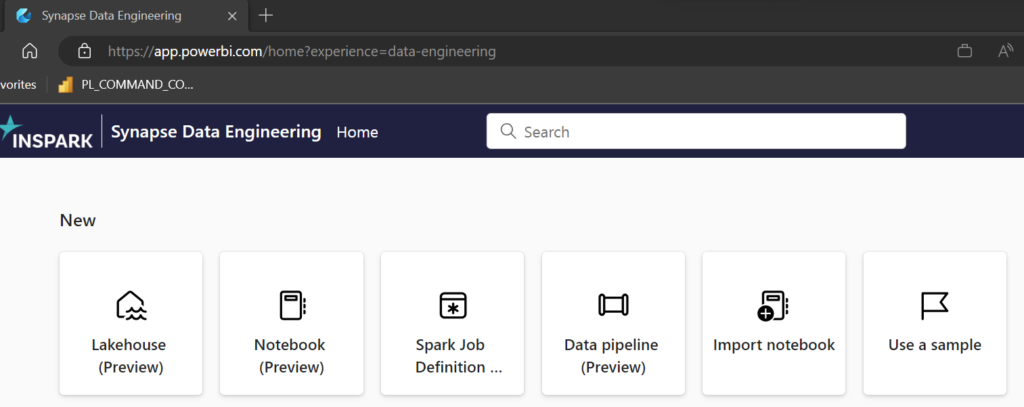
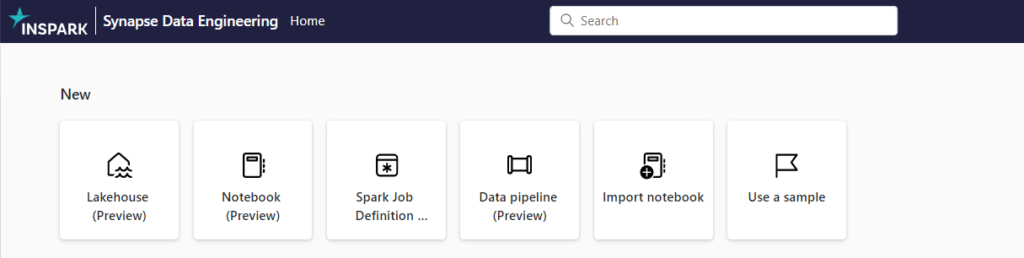
Select Data Engineering
In the top of the page you can directly, see which experience you use.
In this case Synapse Data Engineering Experience, check out the logo on the left side and the text behind home?experienceÂ
Start Trial
Have a look to this page how easily it is to get started with a free TrialFabric (preview)
Guy in the Cube
You also watch the video, who Adam Saxton created:
Documentation
If you have any questions, I’d love to hear them. More information about Microsoft Fabric can be found at my Content Hub:
Since the first of June 2023, we can create Fabric capacities in Azure. This are currently the Pay as You go pricing, later this year the Azure Reservation will follow. OneLake storage pricing is comparable to Azure ADLS (Azure Data Lake Storage) pricing and is not included in the price below. These prices are prices in the West-Europe region, prices can be different across regions.
Note:Â As you can see, the F1024 and F2028 are not having the correct prices, it should be 2 or 4 x F512. The error is already is report to the Fabric Team.
Microsoft Fabric Capacity is a distinct pool of resources allocated to Microsoft Fabric that resides on a tenant. The size of the capacity determines the amount of computation power your organization gets.
Microsoft Fabric has an array of capacities that you can buy. The capacities are split into SKU's. Each SKU provides a different amount of computing power, measured by its Capacity Unit (CU) value.
Creating Fabric Capacity in Azure
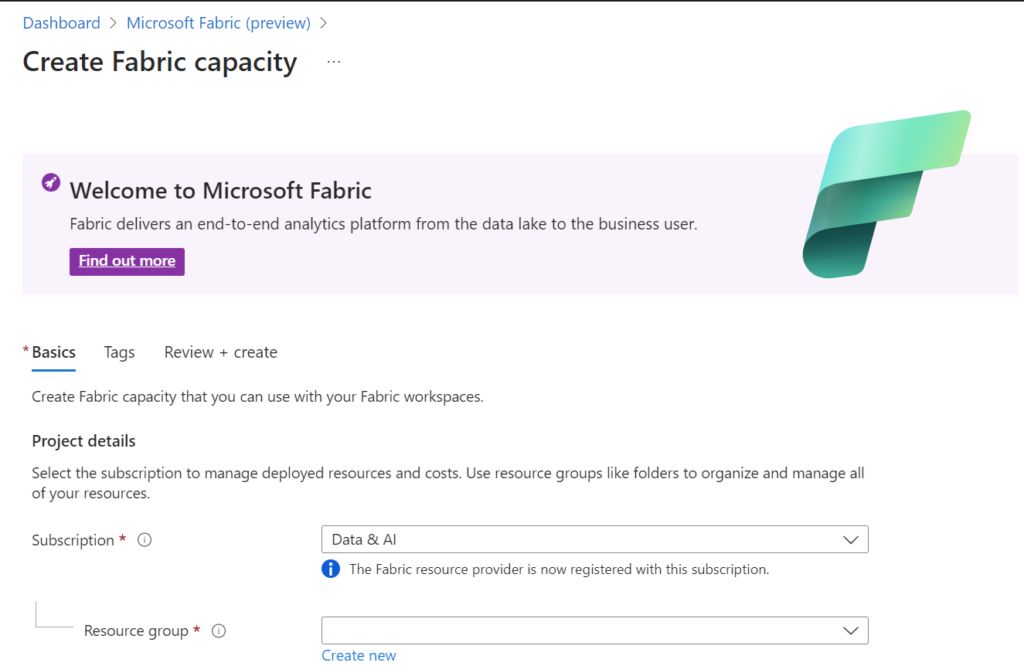
Search for the Fabric Capacity in the Azure Marketplace.
Select the appropriate Subscription and resource group. You can move the Fabric capacity to another Resource Group later if needed.
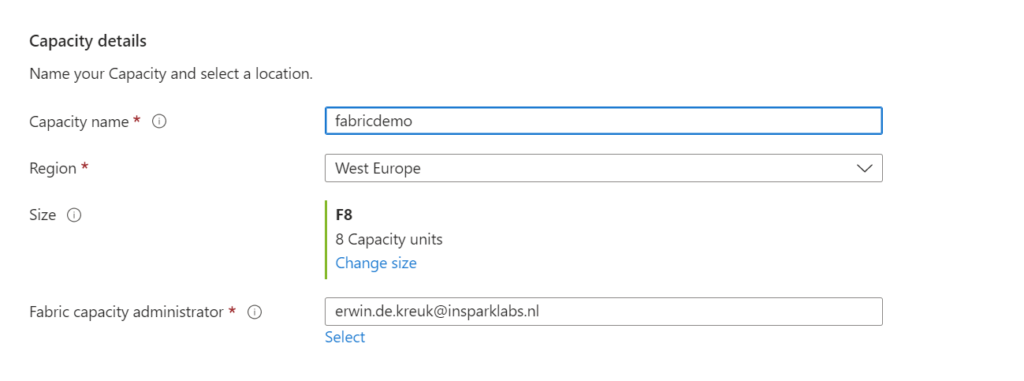
Provide a name for the capacity.
Define the region for the capacity.
Choose the desired size, starting from F2. F64 is equivalent to a Power BI Premium capacity. You can learn more on this page.
Assign a Fabric capacity Administrator.
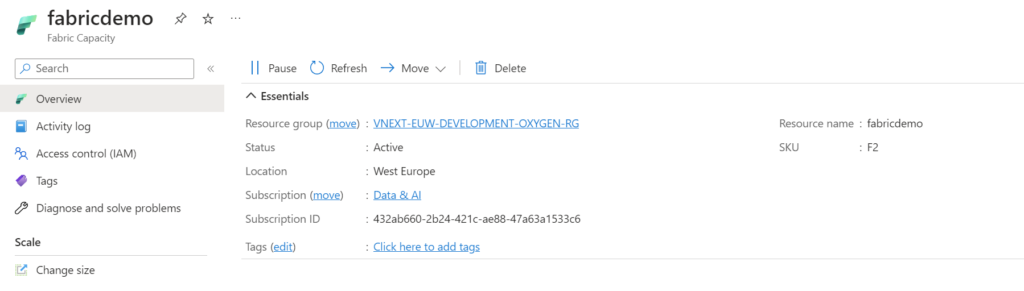
Click on "Create" to initiate the capacity creation process. Once created, you will see the relevant information on the screen.
Assign capacity in Microsoft Fabric
After creating the Fabric capacity, you need to assign it to a Workspace by following these steps:
Open the Microsoft Fabric admin portal.
Select the capacity option on the right side.
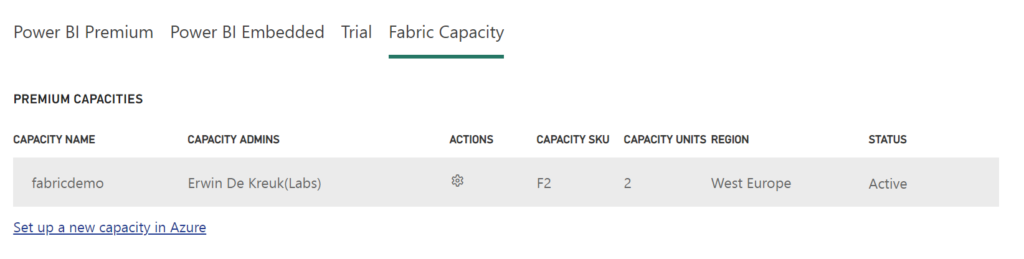
Locate the recently created capacity in the list.
Assign capacity to a Workspace
The last step is to assign the capacity to a Workspace.
On the Workspace level, click on settings.
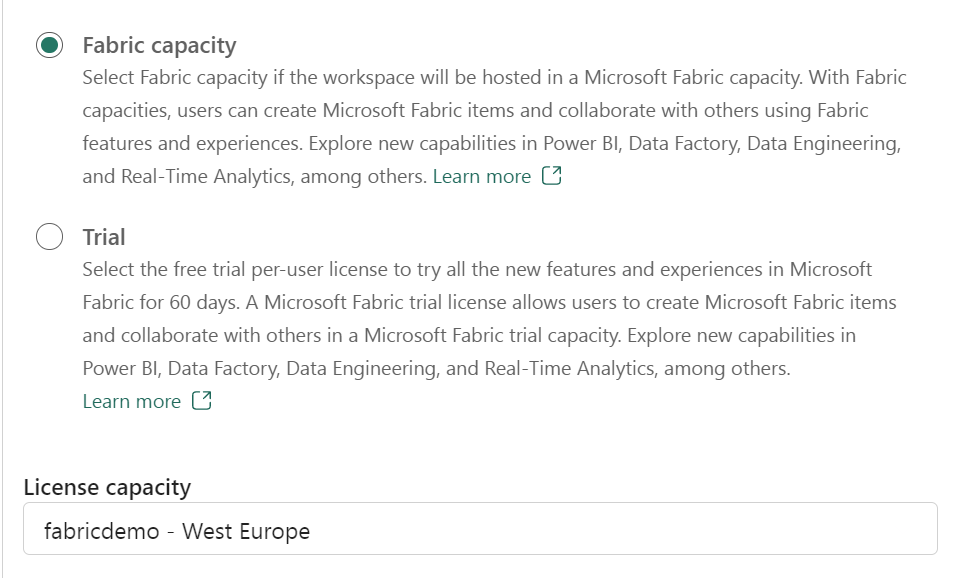
Go to the Premium tab and select the Fabric capacity.
Define the correct License capacity for the Fabric capacity.
Select the Fabric Capacity and define the correct License capacity to it. That's all, you are now using the new capacity.
Capacity Pause/Resume
With the Fabric capacity set up, you can take advantage of the Pause/Resume feature, which allows you to temporarily halt and resume the capacity, making it useful for development and testing purposes. However, please note that this option will not work if you purchase Azure Reservation in the future.
Microsoft Fabric app
To monitor usage and related to Microsoft Fabric capacities, you can use the Microsoft Fabric utilization and metrics app.
To install the Microsoft Fabric Capacity Metrics app for the first time, follow these steps:
Select the Microsoft Fabric Capacity Metrics app.
Select Get it now.
When prompted, sign in to AppSource using your Microsoft account and complete the registration screen. The app takes you to Microsoft Fabric to complete the process. Select Install to continue.
In the Install this Power BI app window, select Install.
Wait a few seconds for the app to install.
It's a pretty simple process to set it up.
Documentation
If you have any questions, I'd love to hear them. More information about Microsoft Fabric can be found at:
Connecting Azure Event Hubs with Eventstream in Microsoft Fabric
In my previous blog I did give you an introduction of the possibilities of Real-Time Analytics in Microsoft Fabric.
In this blog we will have a closer look into how we can connect data from one of our existing Azure Event Hubs.
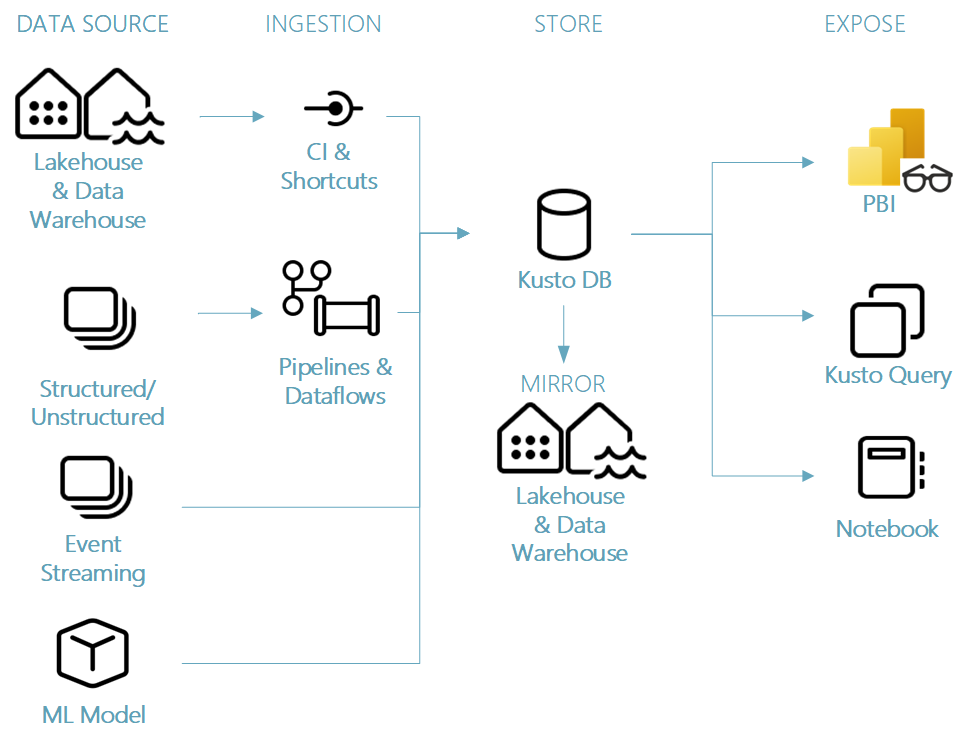
Looking to the above picture, you see an end to end workflow for a Real-Time Analytics scenario. We can directly see which Fabric Artifact we need to use to build the solution. To build the complete solution below took me maximum 20 minutes,.
Loading data from Azure Event Hubs to Lakehouse
Requirements:
An existing Azure Event Hub.
New consumer group(never you use an existing). If you use an existing consumer group then it can happen that the event hub stop sending messages to your existing environment.
Fabric Workspace
Note:
Adding a consumer group is not available in the Basic tier but only in the Standaard Tier.
Creating a Shared Access Policy on the Event Hub
Create a new Shared Access Policy on the Event Hub, with the manage option enabled.
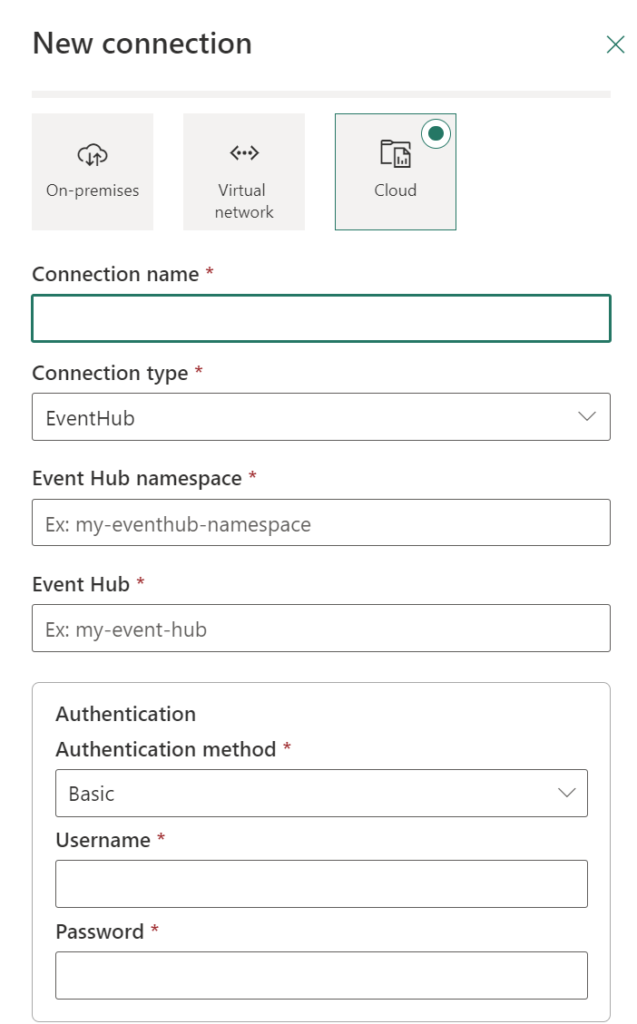
Note down the SAS Policy name and the Primary Key. We will need this later to setup the Connection in Microsoft Fabric.
Create a Data Connection in Microsoft Fabric
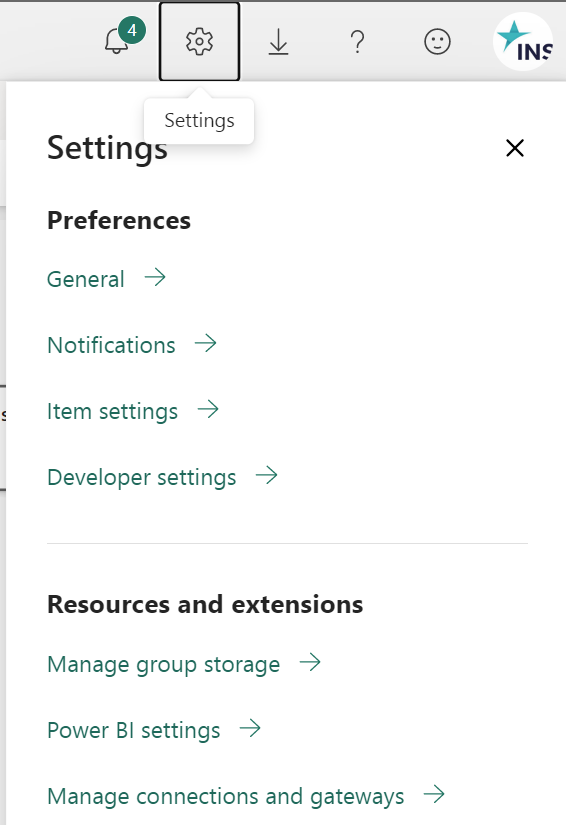
In the menu bar(top right) open the settings toggle and open the Manage Connection option.
Make sure you have a Microsoft Fabric or Power BI Premium capacity assigned to this workspace.Â
Create Eventstream in Microoft Fabric
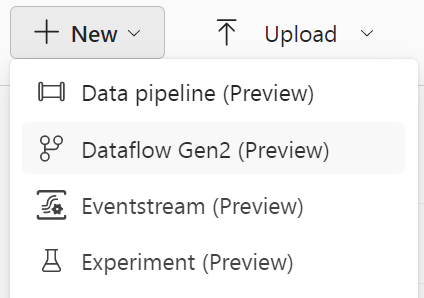
Within our Fabric Workspace, select NEW on the left upper corner and select Eventstream.
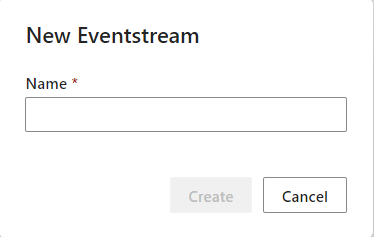
Define a name for the Evenstream and click on create.
This can take a couple of minutes to setup, but don’t worry there are a lot of things happening in the background. Microsoft Fabric is a SaaS application so things needs to be deployed for you.
The great advantage for you, things will much easier to setup.
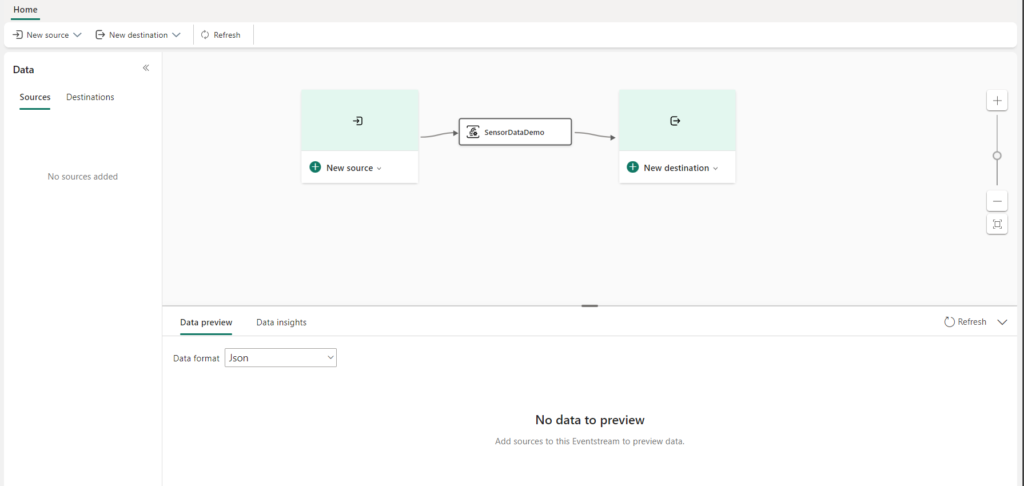
So once everything is ready you will see this new screen:
Create the Eventstream Source
Next step is to connect our Source, in this case the connection to the Event Hub.
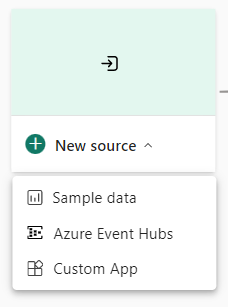
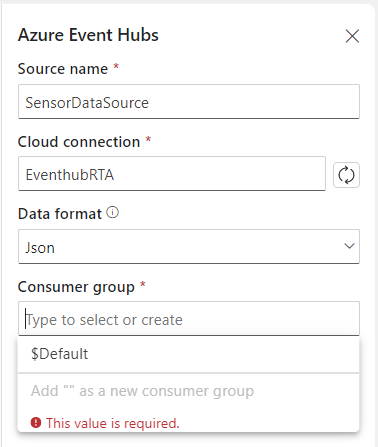
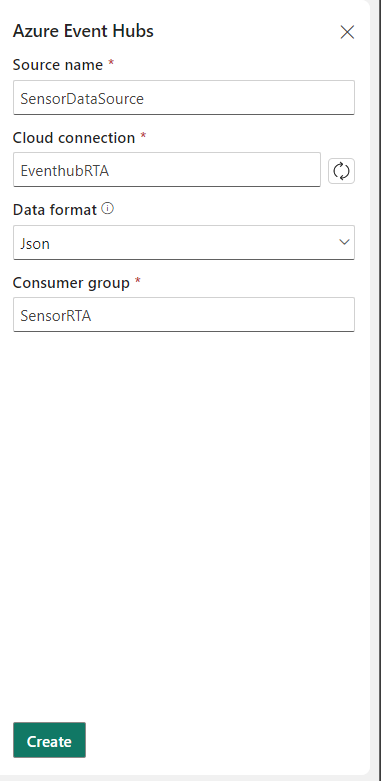
Select the Azure Event Hubs, a new pane will open.
Â
Â
Source name
Define a name for your source, you can use the name of the Event Hub or a custom name
Cloud Connection
Select the connection you’ve created in the beginning of this blog
Data Format
Define the correct format based on your Event Stream
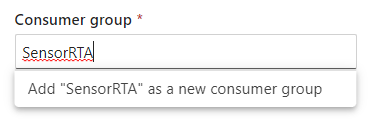
Consumper group
You can select a group you have a created in the beginning of this blog. Or you create a new one as well.
Note: Never you use an existing Consumer Group, because your current application connected to this Consumer Group will stop receiving data.
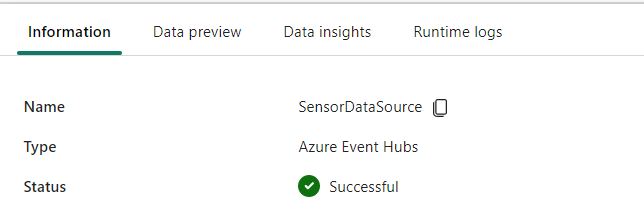
Once all the required field are filled in, click on Create. Now the source of your Eventstream will be created.
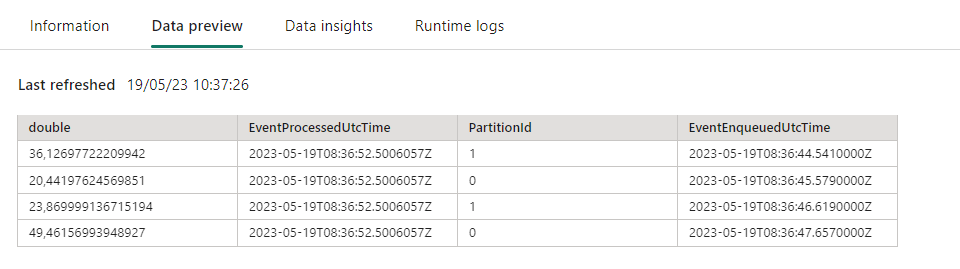
After the connection is setup successfully you can click on Data Preview, to see what kind of data is coming in and if this is the correct data.
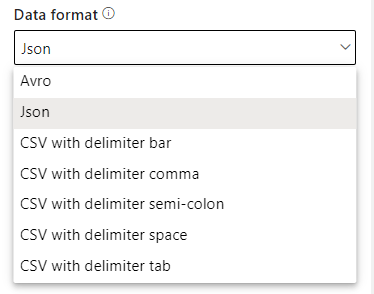
If you data is not shown the correct way, you can change data format to csv or avro.
Destination
One of our last steps in our configuration is to setup the destination for the Eventstream.
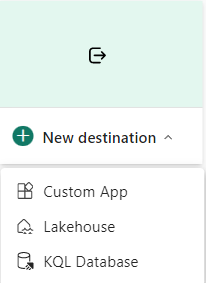
In this blog we will use a Lakehouse(more destination are available), so that we can store our data and use it in a later stadium to build reports on top of the data.
Lakehouse
You can choose if you want to create a new Lakehouse or use an existing one.
If you do not have created a Lakehouse, you need to create one.
Select in left bottom corner, the option Data Engineering.
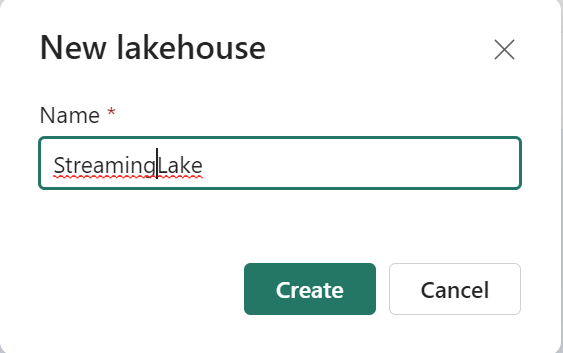
Create a New Lakehouse, define a name and click on create.
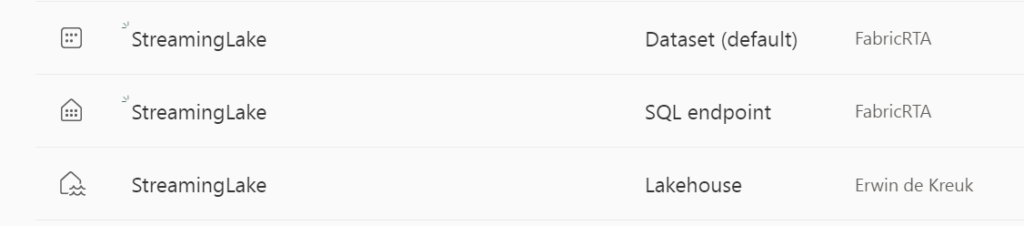
After creating a Lakehouse, you will see that Automatically a Dataset and a SQL Endpoint are created by default. How easy is that!
Create the Eventstream Destination
Create Lakehouse as Eventstream Destination
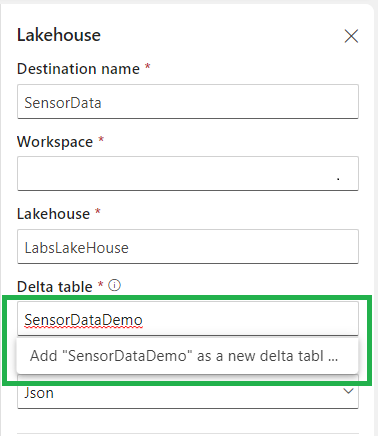
A new windows will open were we can configure the Lakehouse connection/destination.
Destination Name
The name of the destination
Workspace
The workspace were you’re Lakehouse is located
Lakehouse
The Lakehouse you want to use(you can have more than 1 in the same workspace)
Delta table
The Delta Table were you want to store the data, you can also create a new table from here.
Data format
Mostly the same format as the data you added to in Source
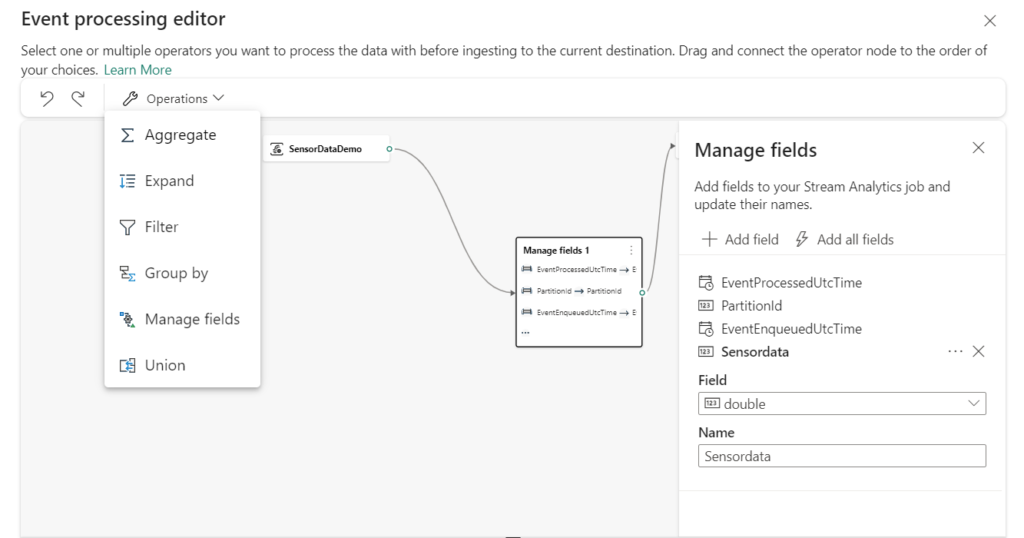
Event Processing
Before you create the destination, you can transform and preview the data that is being ingested for the destination with the Event Processor. The event processor editor is a no-code experience that provides you with the drag and drop experience to design the event data processing logic.
As you can see there’re a lot of operations/transformation possible to transform your data in a correct way, renaming a field is a matter of seconds with a no-code experience.
The last step is to create the destination. It is just as easy as it is, click on Create.
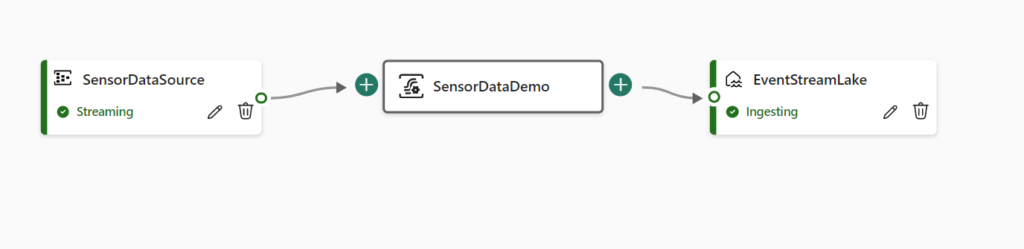
The Eventstream is ready, Source is streaming data and the destination is Ingesting data.
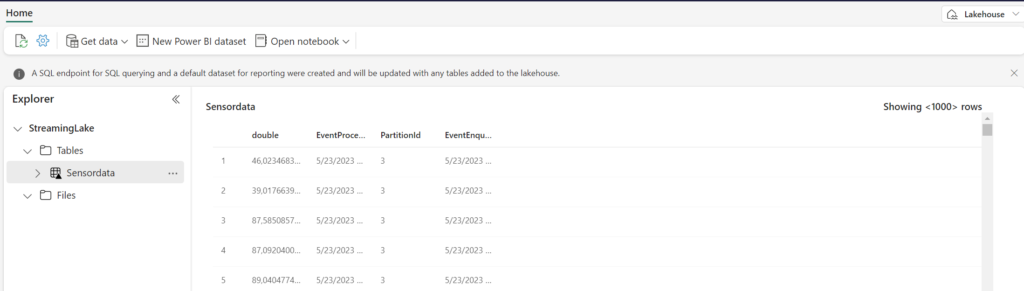
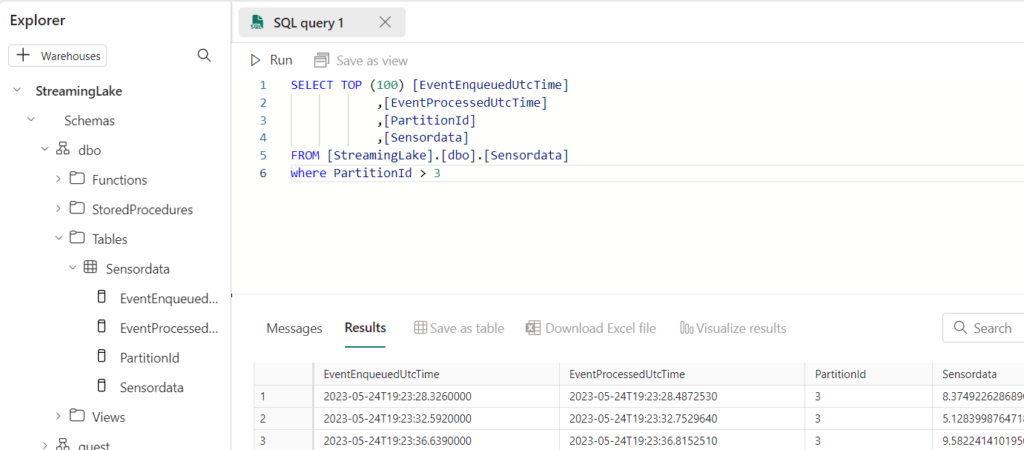
Navigate to your Lakehouse to verify the ingested data.
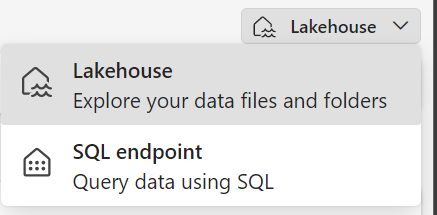
If you prefer to verify with a TSQL command, you can easily switch to a SQL Endpoint mode, which is located in the upper right corner.
And now you can run any type of query you want.
Next Steps
Build Power BI report with the ingested eventdata in the Lakehouse. As mentioned before a default dataset is already created.
In my next blog I will explain how we can start using the KQL database as a destination, so stay tuned.
Documentation
Click below to read more about Microsoft Fabric and Real-Time Analytics.
Introduction to Real-Time Analytics in Microsoft Fabric
Real-Time Analytics is one of the data and analytical workloads/experiences available in Microsoft Fabric, the new platform currently in Public Preview at Microsoft. With Real-Time Analytics, companies and developers can gain valuable insights and analysis from real-time data streams.
A unified analytics solution for the era of AI
Microsoft Fabric brings a unified SaaS-based solution that stores all organizational data where analytics workloads operate. Microsoft Fabric brings together existing offerings such as Data Factory, Azure Synapse Analytics, and Power BI into one unified product for all data and analytics workloads.
Key pilars:
Complete analytics platform
Lake centric and open
Empower every Office user
AI Powered
When Microsoft Fabric is not yet activated in your tenant, you can activate it in the Admin Portal. Please note that Microsoft Fabric Capacity(Trial) or Power BI Premium Capacity is required to get started with Microsoft Fabric.
Microsoft Build
Now that we have seen the initial sessions during Microsoft Build, it's time to delve deeper into a topic. But what an announcement! We have all worked hard on this in the last couple of months. We have done a lot of testing and provided a lot of feedback. And personally, I can say that all feedback has been listened to carefully.
In this blog, I will delve deeper into Real-Time Analytics, one of the available experience in Microsoft Fabric. An experience is a look and feel of various Fabric Artifacts for a specific role such as a Data Engineer, Data Analyst or Data Scientist. For all available experiences see picture above.
Real-Time Analytics
Real-Time Analytics is critical in today's fast-paced business environment. It enables organizations to react immediately to events and trends as they happen, rather than reacting to historical data afterwards. The Real-Time Analytics workload allows users to monitor, analyze, and visualize data in real-time to make fast and data-driven decisions.
Here are some key features and functionalities of Real-Time Analytics in Microsoft Fabric:
Real-time data processing: The workload supports processing large amounts of data in real-time, giving users instant access to up-to-date information.
Advanced analytics: Built-in analytics capabilities enable users to apply complex calculations and statistical models to real-time data for deep insights.
Flexible visualizations: The app offers a wide range of visualization options, such as graphs, charts, and dashboards, to present data in a clear and understandable manner.
With Data Activator(coming soon): Users can set up custom notifications and alerts based on predefined criteria, keeping them informed of important events or anomalies in real-time.
As you can see, you can use Real-Time Analytics for a range of solutions, such as IoT analytics, Telemetry data, human and system logs and in many scenarios including manufacturing operations, cybersecurity, oil and gas, automotive and many more.
Benefits
One of the great benefits of using Real -ime Analytics in Microsoft Fabric is that you have a seamless integration with other artifacts in Fabric such as Lakehouse, Data Warehouse and Machine Learning Models for Predictive Analytics. One of the other benefits in Microsoft Fabric is that you don’t have to start from scratch, is very easy to connect to existing Event Hubs to load your streaming events into Fabric. Which I will explain in my next blog.
Real-Time Analytics Artifacts
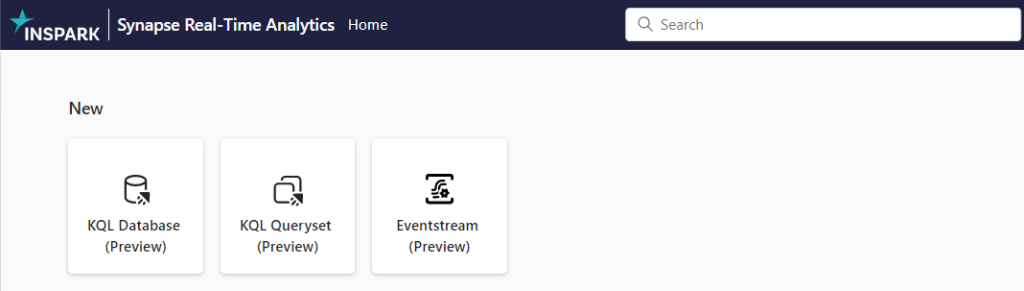
Currently the Real-Time Analytics workload supports 3 different artifacts:
KQL Database: Â Â Â Â Â Â Â Â A Kusto database exactly the same as you were used to in Azure Data Explorer
KQL Queryset:Â Â Â Â Â Collection of queries which you can run on top of your KQL Database
Eventstream: Â Â Â Â Â Â Â Â Â Â Capture, transform and route real-time event stream to various destinations with a no-code experience. Similar to Azure Stream Analytics
OneLake: The foundation for Microsoft Fabric
OneLake eliminates today’s pervasive and chaotic data silos by providing a data lake as a service without you needing to build it yourself. OneLake is the OneDrive for data and like OneDrive, OneLake is provisioned automatically with every Fabric tenant with no infrastructure to manage. All Fabric Artifacts, such as mentioned above for Real-Time Analytics are deployed/ provisioned automatically into the Onelake upon on creation. How easy is that?
Having a closer look at the picture above, you see an end to end workflow for a Real-Time Analytics scenario.
Ingest the data from Event Hub, custom apps, structured and Unstructured data source with pipelines and Dataflows.
Store the data in a KQL Database or Lakehouse.
Expose the data in Power BI and/or make available in Notebooks and KQL Queriesets.
Train and test the data with Machine Learning Models and Experiments.
With this end to end workflow you can directly see which artifacts you need to use to build your Real-Time Analytics Solution.
Public Preview
It's important to note that as Microsoft Fabric is currently in Public Preview, additional functionality is still being developed, and feedback is being incorporated. This presents a great opportunity for users to get involved early, provide feedback, and contribute to the further development of Microsoft Fabric.
When you decide to start using Microsoft Fabric and encounter any issues with the Real-Time Analytics workload, please don't hesitate to reach out to me. I’m here to assist and appreciate your feedback to further enhance the platform.
Click below to read more about Microsoft Fabric and Real-Time Analytics.
In my next blog I will get a bit deeper how easily you can connect existing Event Hubs to Microsoft Fabric. So stay tuned(published on may 26th 2023)
Note:
Please be aware that Microsoft Fabric is currently not authorized for production use as it is still in the Public Preview phase. It's important to consider this when planning deployments or making critical business decisions.
In the video below, Tzvia Gitlin Troyna, a Principal Manager with Synapse Real-Time Analytics experience in Microsoft Fabric, shares a first look at what's included in the first release of Real-Time Analytics in Microsoft Fabric.
Open your Synapse Studio and select the Management Hub.
Add a new Linked Service
If you haven’t connect to Power BI before, you will see the screen above. If you want to add another Power BI Linked Service(Workspace).
Search for Power BI in the available Linked Services.
Connect or Select the Power BI Icon.
Select the correct Power BI Workspace Name. You can only selected a Power BI Workspace which is connect to the same Azure tenant as your Azure Synapse Analytics Workspace. So both Services needs to be in the same Azure Tenant.
Once you have connected to your Workspace, you can see all the existing Reports from that Workspace.
Browse in your Synapse Studio to the Develop Tab.
Create a new Power BI dataset
From the same develop tab , you can also create a new dataset for Power BI. Click on the New Power BI dataset.
The following screen will open on the right site of your Synapse Studio.
Make sure you have Power BI Desktop installed. If not you should do in now.
Select a Data Source. You will find here your SQL Pool and if you have created Databases as SQL on Demand as well. How to create a SQL on Demand database I will explain in another article.
Download the created .pbids file.
Open Power BI Desktop. Sign in with the correct credentials
Now you can start building your report. Once you’re ready, upload the report to your Workspace and the DataSet and the Report will be visible in your Synapse Studio.
You can now use your report, create new reports or change the reports.
Currently you can not download the report. So once you have changed the report, you have to go back to the Power BI Service to download the pbix file. Same for all other Power BI settings, like scheduling.
In 1 of my next articles I will go deeper into the various possibilities such as import, direct query or the use of Azure Analysis Services in combination with Power BI.
Thanks for reading and like always, feel to free send questions.