Datagrillen: Data, Bratwurst und Beer

Datagrillen: Data, Bratwurst und Beer

Data, Bratwurst and Beer

An event that started 5 years ago as a small event, that has grown into an event with 200 participants, 50+ sessions, 5 tracks, 2 days and a BBQ in a small place in Germany, called Lingen. William Durkin and Ben Weissman are the main organizers, but are supported by a bunch of volunteers and supported by a great group of sponsors.

Speaker/Volunteer diner

Wednesday the event started for me with a drink in Hotel Lobby and with a great dinner in the Alte Posthalterei. We had a great evening, met some old friends and made some new friends.
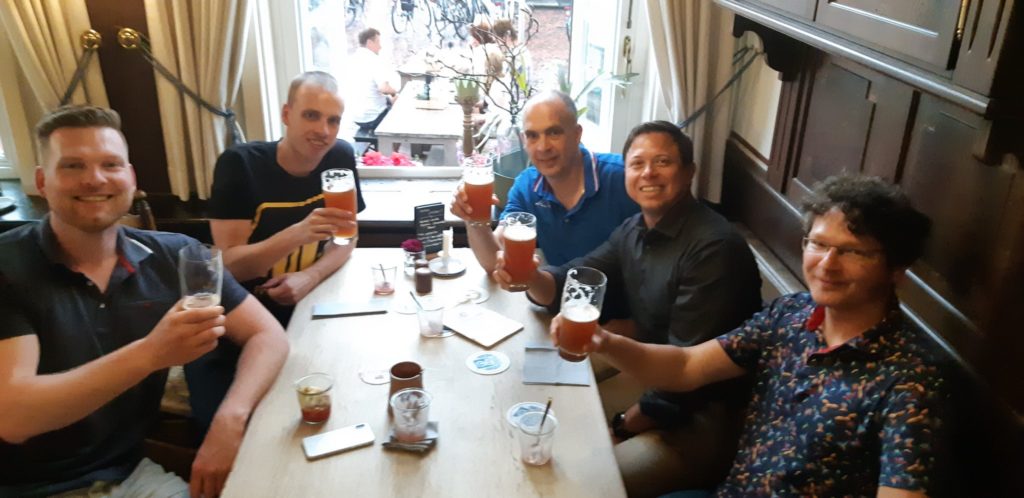
DataGrillen Dinner

Sessions

DataGrillen Keynote

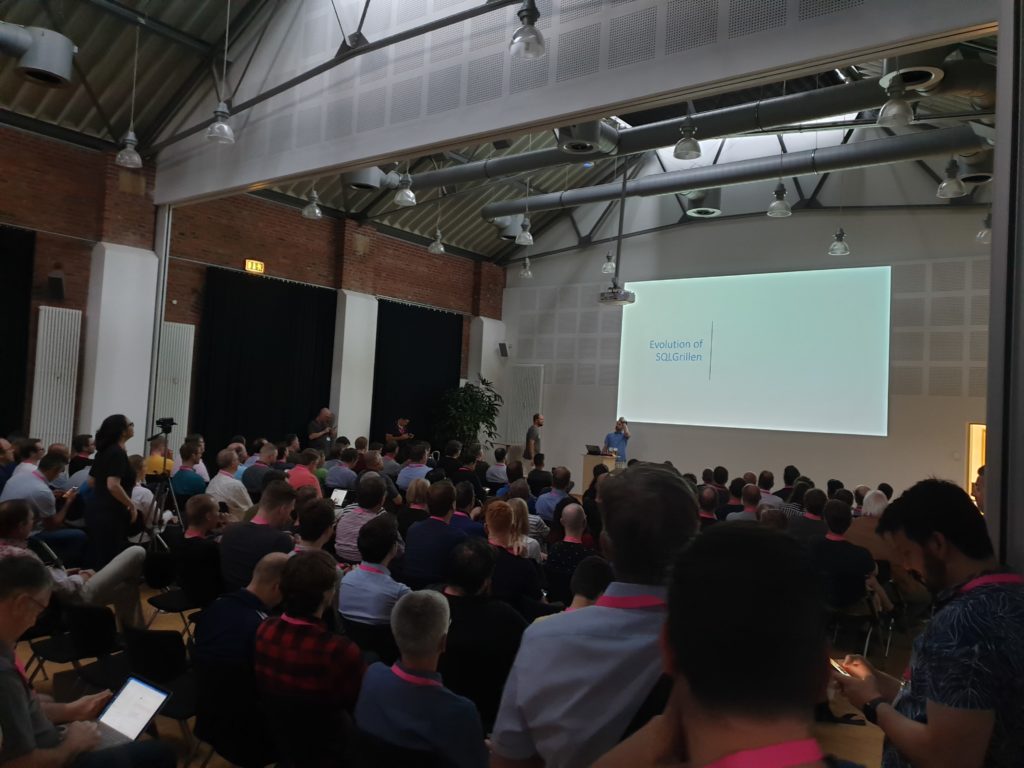
The first day started early, we helped preparing the badges and did the check in. Around 9:00 am almost every attendee was in and ready for the Keynote. During the keynote there was a special welcome to all the newcomer Speakers and their mentors. This newcomer track is designed to accommodate people new to presenting. In my opinion this newcomer tracks should be introduced to all events.

During these 2 days there were 5 sessions divided over 5 tracks on both days. I have attended many nice sessions, but I have certainly gained a lot of new inspiration out of these sessions.
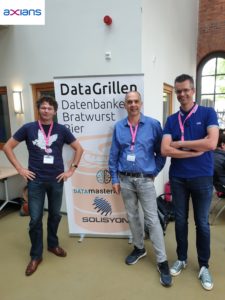
DataGrillen Axians

Day 1 ended with the traditional bbq. Personally, I love bbq a lot and know that it is hard work to get a bbq for 200 people, but the catering did very well. Compliments to the catering.

During the days I have spoken to many people, both well-known and also many new ones. From Axians we joined this event with 3 people.

We are 1 large #sqlfamily.


Rafle time

After 2 tiring days, the event was traditionally closed on Friday by William and Ben with the raffle. And that was for me also the end of 2 great days and I could start with my home trip.DataGrillen Raffle
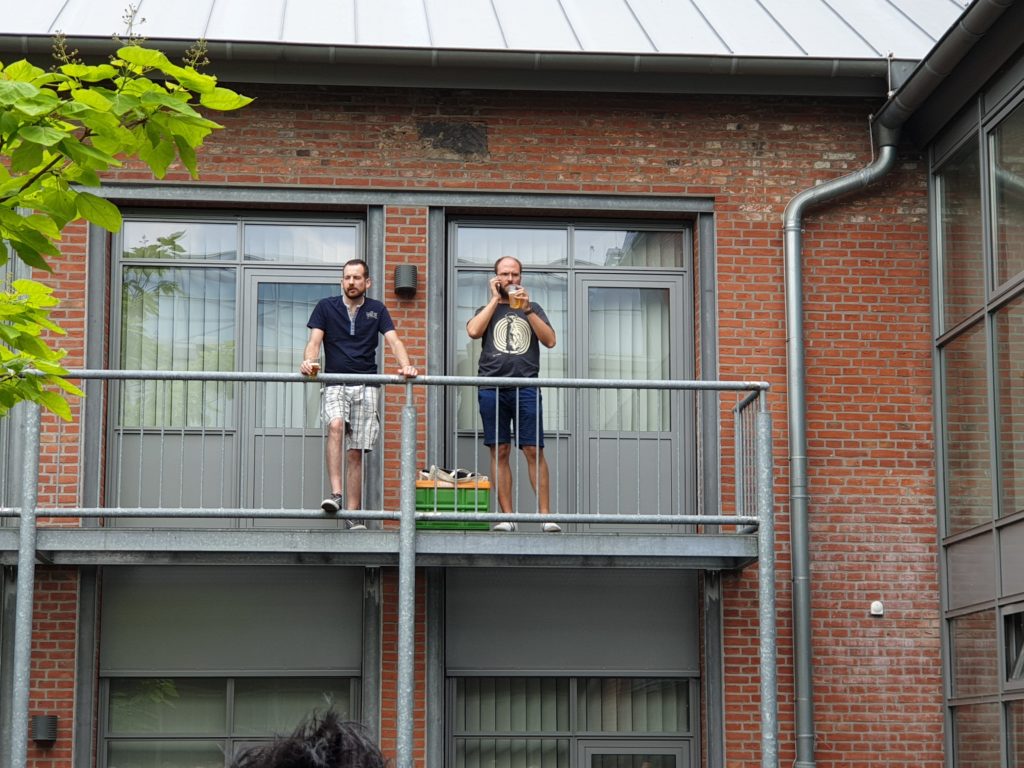
 

Sponsors

Thank you Solisyon, Datamasterminds, SentryOne, PowerBi Sentinel, dbWatch, Rosen, Shop Apotheke Europe, Redgate, Hedda and IT Emsland without you the event wasn’t free, there where no drinks and there was no food.

Next Year

Next year the event will take place on may 28 and may 29.

Call for Speakers is  open https://sessionize.com/datagrillen-2020/

See you next year. And once again thank you William and Ben for organizing
SQLBits session: Microsoft Purview Data Policy App

SQLBits 2023 Thanks everyone for visiting my session during SQLBits. It’s great to see such a full room and that so many people have started using Microsoft Purview.   SLIDES The slides can be downloaded via the link below, so that you can view them again at…

My Virtual Session Scottish Summit 2021

Scottisch Summit 2021 This Saturday I’ve been speaking during Scottisch Summit 2021. It was my first Summit, but is was a great event, with more than  400 sessions covering the full Microsoft Stack in 7 different language English, Spanish, German, French, Italian,…

My Virtual Session DataSaturday #1 Pordenone

DATA SATURDAY #1 PORDENONE This Saturday I’ve been speaking during DataSaturday #1 Pordenono. The first ever DataSaturday after Pass has retired. If you want to visit more Datasaturday events please visit the Data Saturdays event page. Azure Purview I presented a…

Techoroma NL 2019

Azure Key Vault, Azure Dev Ops and Azure Data Factory how do these Azure Services work perfectly together! Some impressions during Techorama NL 2019.    

Datatoboggan 2021(Video)

Recording of my session during Data Toboggan 2021 Azure Purview Microsoft’s answer to Data Governance and Data Lineage

Scottisch Summit 2021(Video)

Recording of my session during Scottisch Summit 2021 Is there a way that we can build our Azure DataFactory all with parameters based on MetaData?

SQL SERVER KONFERENZ 2020

SQL SERVER KONFERENZ 2020 Date: 4-5 March Location: KongressCenter Darmstadt   Speaking Dinner The speaker dinner on Tuesday evening was held in Restaurant Sitte. And yes what do you eat when you are in Germany a delicious Schnitzel with baked potatoes. It was a…

October=Speaking Month

DataSaturday Holland and DataMinds in Belgium Like last year I have been selected again this year for both events to speak. Cool to be able to speak at 3 different events within 7 days, but also to see many known people and to met new people. Data Saturday Data…

Speaking at SQL BITS 2022

SQL BITS 2022 We’re Hitting the Arcade SQL Bits is back this year in London from March 8-12 2022. SQLBits is the largest data conference in the world and this year’s theme is to bring us back to our incandescent youth, so prepare to level up your data skills and reach…

Data:Scotland

Data: Scotland 2022 Microsoft Purview Scotland’s Data Community Conference happened this year again in Glasgow. This years event was happening in  a sunny Glasgow, more then 400 attendees and more then 50 sessions. It was great to see so many people live again. I…

SSMS 18.xx: Creating your Azure Data Factory SSIS IR directly in SSMS

Creating your Azure Data Factory(ADF) SSIS IR in SSMS

Since  version 18.0 we could see our Integration Catalog on Azure Instances directly.

Yesterday I wrote an article how to Schedule your SSIS Packages in ADF, during writing that article I found out that you can also created your SSIS IR(Integration Runtime) directly in SSMS.

I never saw the option before, it was always grayed out(because the SSISDB was already in Azure). But if you connect to an On Premise system it will not be grayed out.

An easy scenario to lift and shift your SSIS Packages to Azure, with a couple of steps you can create your SSIS IR.

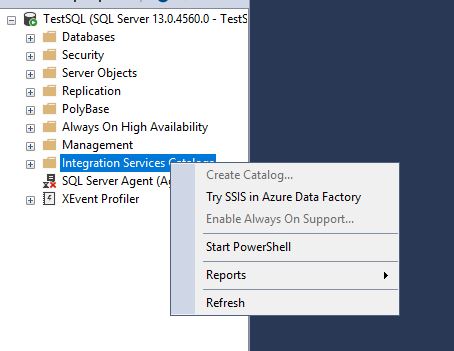
Go to your Integration Services Catalog on your On Premise Server. Right Click and select the option “Try SSIS in Azure Data Factory” and click on Next.

Create ADF


Prerequisites

As Prerequisites you will need:

An Azure account.

An Azure SQL Database server or Managed Instance.


Configuration of your SSIS IR

Create SSIS IR in Azure wizard.

Creating ADF SSIS SSMS

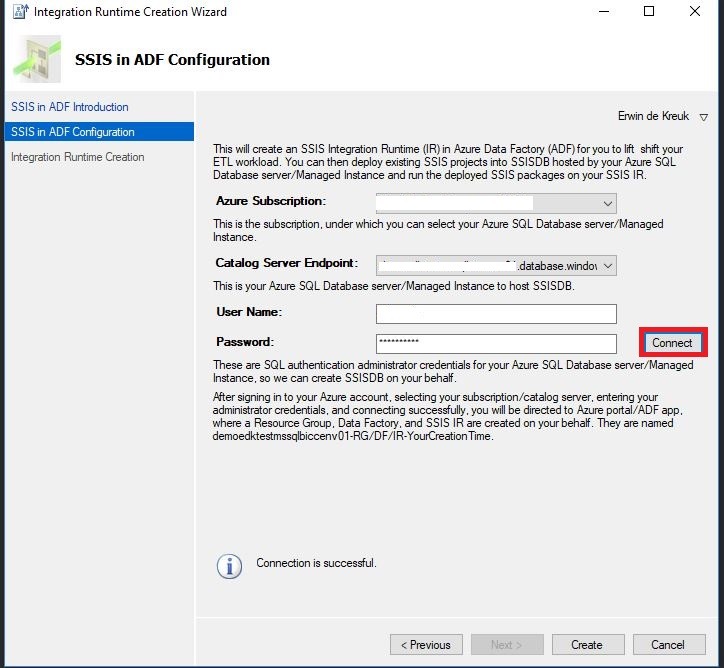
On the right upper corner you can log in to your Azure Subscription.

Select the correction Subscription, in case your have more subscription assigned to this account.

Select the Catalog Server where you want to install your SSIS IR on. This server cannot have an existing SSISDB.

Provide the necessary log in details and click on connect.


Creating ADF SSIS SSMS Validation


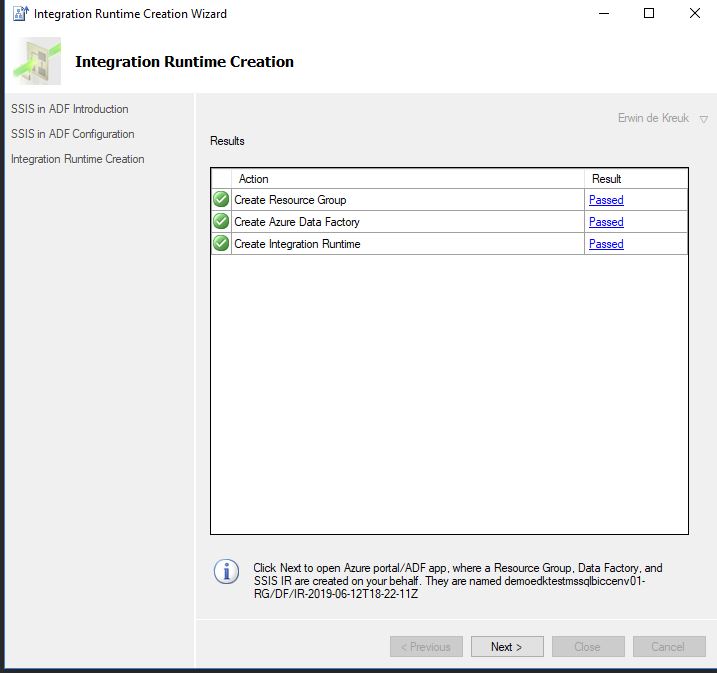
The last step is to Create your SSIS IR.

After you have clicked on Create,  SSMS will do some validations and after these validations you will be asked to open the ADF Portal.


Azure Data Factory Portal

Creating ADF SSIS


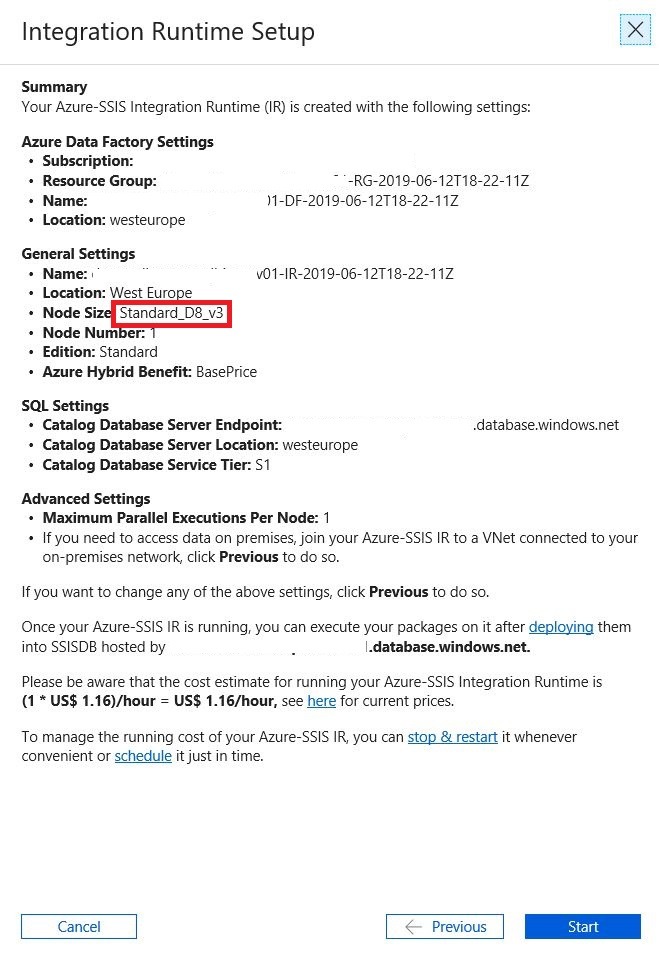
After you logged into the portal you will see a summary of the detail how your SSIS IR will be setup.

If you click on next your SSIS IR will be started.


Change Settings

To change any of the Parameters above you need to use the previous button. You can change:

Number of Parallel Executions Per Node

Custom Setup Container SAS URI

VNET

Node Size

License

The name of your SSIS IR and Resource Group are create by the setup and cannot be changed.

The Resource Group for example is created in the Region US-East.


ADF Pipeline


Conclusion

It is a simple way to setup your SSIS IR in Azure, but I do prefer do this my self trough the Azure Portal or automated with a PowerShell script.

SSMS 18.1: Schedule your SSIS Packages in Azure Data Factory

Schedule your SSIS Packages with SSMS in Azure Data Factory(ADF)

This week SQL Server Management Studio version 18.1 was released, which can be downloaded from here.

In version 18.1 the Database diagrams are back and from now on we can also schedule SSIS Packages in ADF via SSMS.


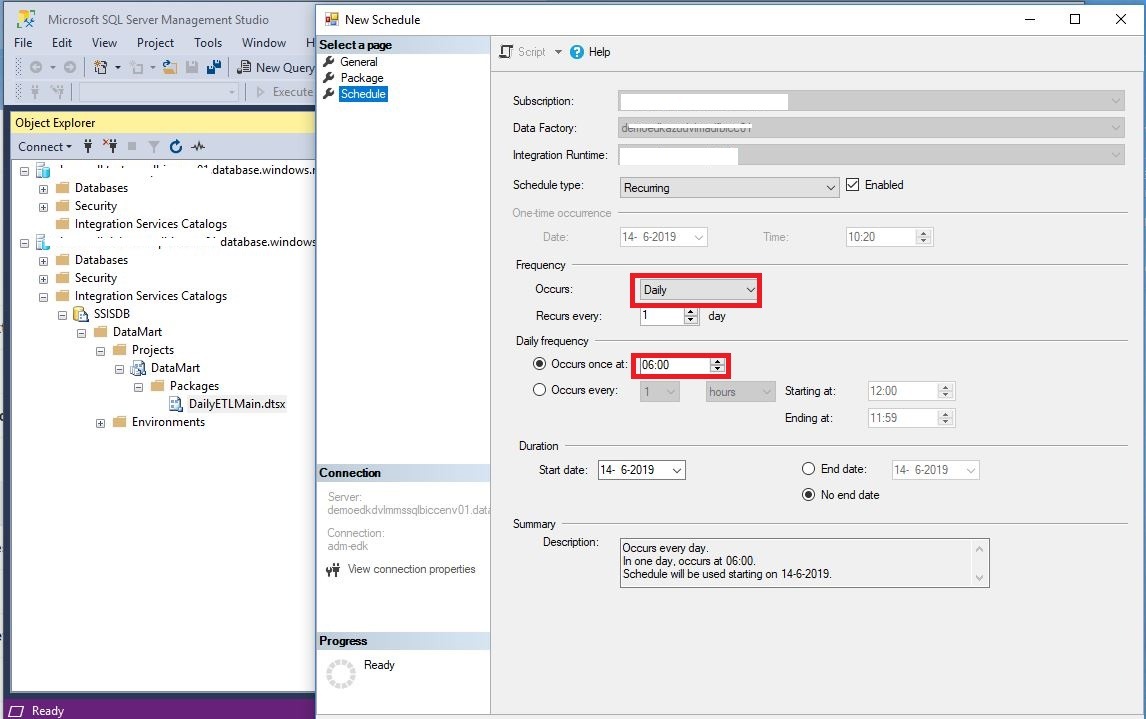
Select the package you want to schedule in your Integration Services Catalog,

Schedule SSIS Packages


Create the schedule you want to create and click on OK.

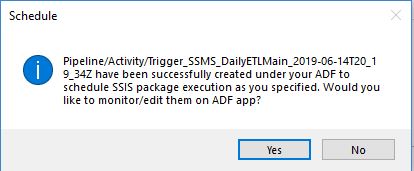
 Your schedule will be created in Azure Data Factory.

SSMS Schedule


Azure Data Factory

In Azure Data Factory a pipeline and trigger are created automatically

SSIS Packages Azure Data Factory Pipeline


Azure Dev Ops

Scheduling your SISS packages is not working fine when you have Azure Dev Ops Enabled. Pipeline and Trigger are published to the Data Factory instead of Azure DevOps GIT as you can see below.

My advice will be to build your schedule/trigger directly in Azure Data Factory when you ‘re using Azure Dev Ops.

SSMS Azure Dev Ops


In case you have any questions left, do not hesitate to ask them. I’m more then happy to answer them.