Speaking(Virtual) at SQL Saturday #963 Denmark

Speaking(Virtual) at SQL Saturday #963 Denmark

SQL Saturday 963 Denmark

PASS SQLSaturday is a free training event for professionals who use the Microsoft data platform. These community events offer content across data management, cloud and hybrid architecture, analytics, business intelligence, AI, and more.

My first virtual event

I like to interact during my session, so I’m curious if that will work. Last week I recorded my session for SQL Bits and that is quite strange when you look back. I am really looking forward to it, my session starts at 14:30.

The complete schedule can be found here. Are there is still time to register!!

My Session

Session Title:

Azure Key Vault, Azure Dev Ops and Data Factory how do these Azure Services work perfectly together!

Session Details

Can we store our Connectionstrings or BlobStorageKeys or other Secretvalues somewhere else then in Azure Data Factory(ADF)? Yes you can! You can store these valuable secrets in Azure Key Vault(AKV). But how can we achieve this in ADF? And finally how do we deploy our DataFactories in Azure Dev Ops to Test, Acceptance and Production environments with these Secrets ? Can this be setup dynamically? During this session I will give answers on all of these questions. You will learn how to setup your Azure Key Vault, connect these secrets in ADF and finally deploy these secrets dynamically in Azure Dev Ops. As you can see a lot to talk about during this session.

Do I see you on Saturday 26th of September?


Speaking(Virtual) at SQL Saturday #963 Denmark

SQL Saturday 963 Denmark PASS SQLSaturday is a free training event for professionals who use the Microsoft data platform. These community events offer content across data management, cloud and hybrid architecture, analytics, business intelligence, AI, and more. My…

My Virtual session DataWeekender 4.2

DataWeekender 4.2 This Saturday I’ve joined the Van and Spoke at DataWeekender Azure Purview I presented a session on Azure Purview Microsoft’s answer to Data Governance and Data Lineage You can find my slides below on Slideshare: Data weekender4.2 azure purview erwin…

Data:Scotland

Data: Scotland 2022 Microsoft Purview Scotland’s Data Community Conference happened this year again in Glasgow. This years event was happening in  a sunny Glasgow, more then 400 attendees and more then 50 sessions. It was great to see so many people live again. I…

My Virtual Session Scottish Summit 2021

Scottisch Summit 2021 This Saturday I’ve been speaking during Scottisch Summit 2021. It was my first Summit, but is was a great event, with more than  400 sessions covering the full Microsoft Stack in 7 different language English, Spanish, German, French, Italian,…

Data Toboggan January 2022 (Video)

Recording of my session during the Data Toboggan January 2022 conference. Dealing with different roles in Azure Synapse Analytics

My First Blog Post SQLSatHolland 790

Yeah, m y first blog is LIVE After a good talk with Reza Rad from RADACAD during SQLSatHolland, I decided to start my first blog! Knowledge sharing is very important, it gives me a lot of energy. But it also gives others people in the community energies to pick up new…

Techoroma NL 2019

Azure Key Vault, Azure Dev Ops and Azure Data Factory how do these Azure Services work perfectly together! Some impressions during Techorama NL 2019.    

My Session at TechoramaNL 2019

TechoramaNL 2019 Date: 2 th October Location: Pathé Ede From September 30 th to October 2 nd TechoramaNL was held in the Netherlands for the 2nd time. TechoramaNL is the largest deep knowledge IT conference in the Netherlands with 1500 participants and 120 sessions in…

My Virtual session at Data Toboggan

An inaugural event specializing on Azure Synapse Analytics Data Toboggan This Saturday I’ve been speaking during Data Toboggan an inaugural event specializing on Azure Synapse Analytics. 12 Hours of sessions with amazing speakers. Azure Purview I presented a session…

Data Saturday Stockholm

Data Saturday Stockholm Bra så alla tillbaka personligen This means great so everyone back in person. Last weekend I had the honor to speak at Data Saturday in Stockholm. About one of my favourite topics Azure Synapse Analytics. It was nice to see everyone in person…

Parameterize Linked Services in ADF

Parameterize Linked Services in ADF

Azure

by Erwin | Jul 9, 2020

Parameterize Linked Services 

For my Azure Data Factory solution I wanted to Parameterize properties in my Linked Services. Not all properties are Parameterized by default through the UI. But there's another way to achieve this.


Linked Service

Open your existing Linked Services.
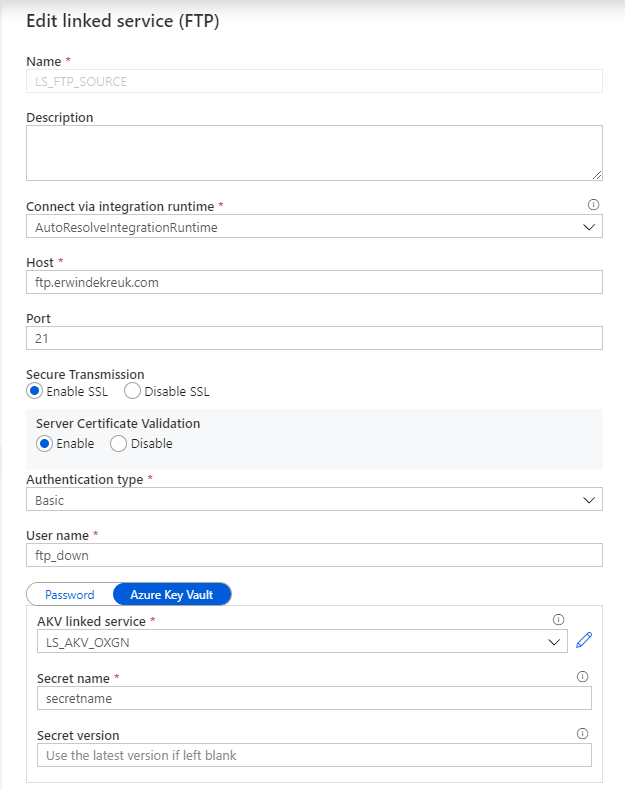
Linked Services ADF

In this situation I want to Parameterize my FTP connection so that I can change the Host name based on a Azure Key Vault Secret.

By default is this not possible through the UI but in the Bottom of your Linked Service there is a Advanced box
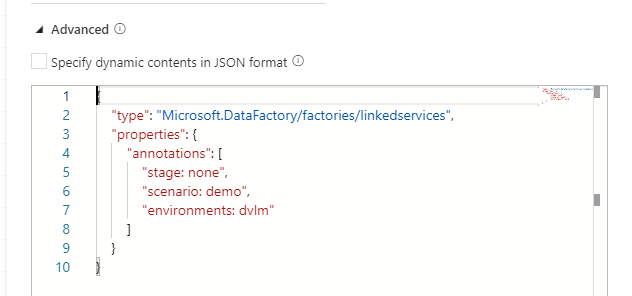
Linked Services Advanced


If you enable this box you can start building your own connection, but also create your own Parameters for this connection.

How to start:

As a base we will use the default code or our connection

Linked Services Code

{
    "name": "LS_FTP_SOURCE",
    "properties": {
        "annotations": [
            "stage: none",
            "scenario: demo",
            "environments: dvlm"
        ],
        "type": "FtpServer",
        "typeProperties": {
            "host": "ftp.erwindekreuk.com",
            "port": 21,
            "enableSsl": true,
            "enableServerCertificateValidation": true,
            "authenticationType": "Basic",
            "userName": "ftp_down",
            "password": {
                "type": "AzureKeyVaultSecret",
                "store": {
                    "referenceName": "LS_AKV_OXGN",
                    "type": "LinkedServiceReference"
                },
                "secretName": "secretname"
            }
        }
    },
    "type": "Microsoft.DataFactory/factories/linkedservices"
}
Copy this code to your advanced box and enable the option Specify dynamic contents in JSON format/

Now you can start adding new parameters.
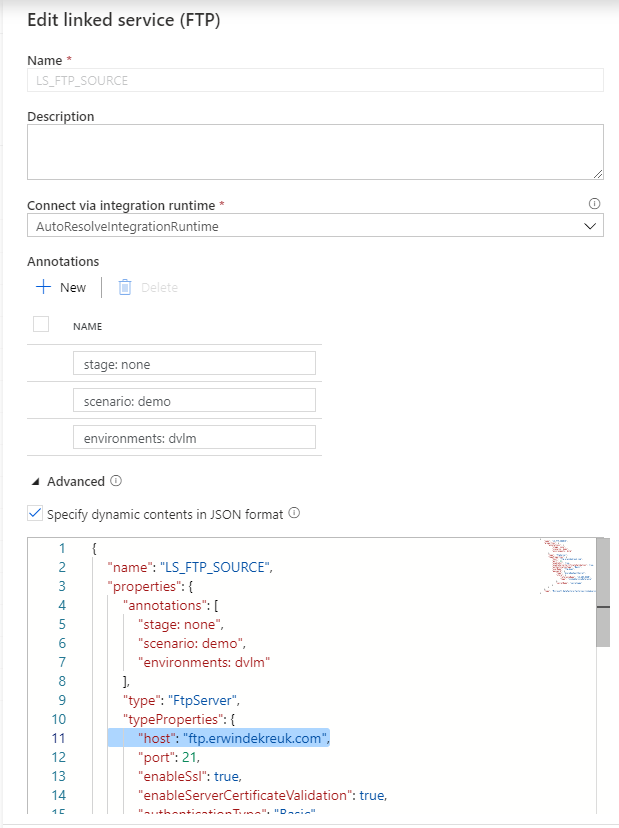
Linked Services Advanced

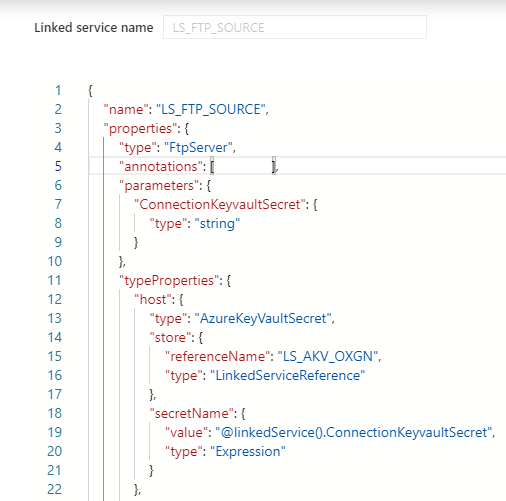
If you want to Parameterize your HOST name  connection you have to add in the top of the code a new Parameter, under the type of your connection

    "properties": {
        "type": "FtpServer",
        "parameters": {
            "ConnectionKeyvaultSecret": {
                "type": "string"
            }

After you have done this, you need to specify for which properties you want to use this parameter. In my case I want to read the parameter form my Azure Key Vault for my HOST propertie.

The JSON code below will now use above parameter as an input.

        "typeProperties": {
            "host": {
                "type": "AzureKeyVaultSecret",
                "store": {
                    "referenceName": "LS_AKV_OXGN",
                    "type": "LinkedServiceReference"
                },
                "secretName": {
                    "value": "@linkedService().ConnectionKeyvaultSecret",
                    "type": "Expression"
                }
            }

Save your connection and you will see that your UI is changed and that you have to define all your setting through the Advanced Editor.

If you test your connection you will now see that you have to fill in a parameter.
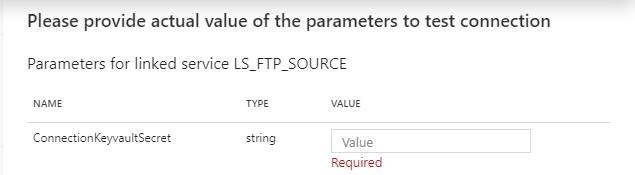
Linked Service Test Connection

And now you can create parameters of every TypeProperties within your connection.

The code below will create Parameters for your Host, Username and Password entries with Azure Key Vault enabled. For the authenticationType you have to choose between Basic and Anonymous. But can also at this to your Azure Key Vault.

{
    "name": "LS_FTP_SOURCE",
    "properties": {
        "type": "FtpServer",
        "parameters": {
            "ConnectionKeyvaultSecret": {
                "type": "string"
            },
            "UsernameKeyvaultSecret": {
                "type": "string"
            },
            "PasswordKeyvaultSecret": {
                "type": "string"
            },
            "authenticationType": {
                "type": "string"
            }
        },
        "annotations": [ ],
        "typeProperties": {
            "host": {
                "type": "AzureKeyVaultSecret",
                "store": {
                    "referenceName": "LS_AKV_OXGN",
                    "type": "LinkedServiceReference"
                },
                "secretName": {
                    "value": "@linkedService().ConnectionKeyvaultSecret",
                    "type": "Expression"
                }
            },
            "port": 21,
            "enableSsl": false,
            "enableServerCertificateValidation": false,
            "authenticationType": "@linkedService().authenticationType",
            "userName": {
                "type": "AzureKeyVaultSecret",
                "store": {
                    "referenceName": "LS_AKV_OXGN",
                    "type": "LinkedServiceReference"
                },
                "secretName": {
                    "value": "@linkedService().UsernameKeyvaultSecret",
                    "type": "Expression"
                }
            },
            "password": {
                "type": "AzureKeyVaultSecret",
                "store": {
                    "referenceName": "LS_AKV_OXGN",
                    "type": "LinkedServiceReference"
                },
                "secretName": {
                    "value": "@linkedService().PasswordKeyvaultSecret",
                    "type": "Expression"
                }
            }
        }
    }
}

Thanks for reading my blog post and have fun with Parameterization of your Linked Services in ADF.

Feel free to leave a comment

Azure Data Factory and Azure Synapse Analytics Naming Conventions

Naming ConventionsAzure Naming Conventions

More and more projects are using Azure Data Factory and Azure Synapse Analytics, the more important it is to apply a correct and standard naming convention. When using standard naming conventions you create recognizable results across different projects, but you also create clarity for your colleagues. In addition to that, it is easier to add these projects to other services such as Managed Services, Azure DevOps,  etc etc,  because standards are used.

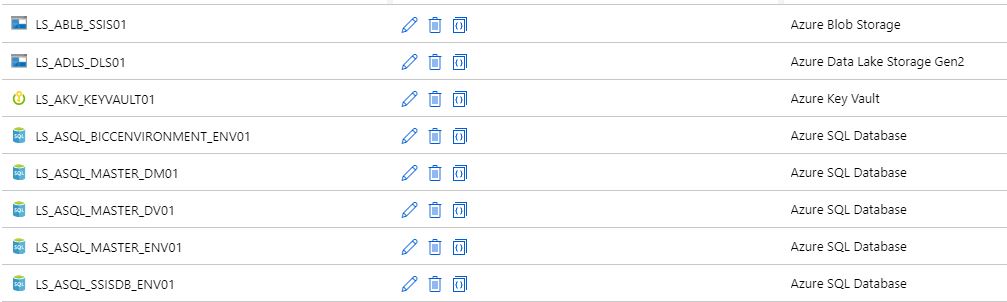
To start with these naming conventions, I have made a list of suggestions with most common Linked Services. The list is not exhaustive, but it does provide guidance for new Linked Services.

There are a few standard naming conventions that apply to all elements in Azure Data Factory and in Azure Synapse Analytics.

  • *Names are case insensitive (not case sensitive).  For that reason I’m only using CAPITALS.
  • *Maximum number of characters in a table name: 260.
  • All object names must begin with a letter, number or underscore (_).
  • Following characters are not allowed: “.”, “+”, “?”, “/”, “<”, ”>”,”*”,”%”,”&”,”:”,””

These rules are also defined on the following link

This post has been updated on Feb 2nd, 2023 with the latest connectors.

Azure

Abbreviation Linked Service Dataset
Azure Blob Storage ABLB_ LS_ABLB_ DS_ABLB_
Azure Cosmos DB SQL API ACSA_ LS_ACSA_ DS_ACSA_
Azure Cosmos DB MongDB API ACMA_ LS_ACMA_ DS_ACMA_
Azure Data Explorer ADEX_ LS_ADEX_ DS_ADEX_
Azure Data Lake Storage Gen1 ADLS_ LS_ADLS_ DS_ADLS_
Azure Data Lake Storage Gen2 ADLS_ LS_ADLS_ DS_ADLS_
Azure Database for MariaDB AMDB_ LS_AMDB_ DS_AMDB_
Azure Database for MySQL AMYS_ LS_AMYS_ DS_AMYS_
Azure Database for PostgreSQL APOS_ LS_APOS_ DS_APOS_
Azure File Storage AFIL_ LS_AFIL_ DS_AFIL_
Azure Search ASER_ LS_ASER_ DS_ASER_
Azure SQL Database ASQL_ LS_ASQL_ DS_ASQL_
Azure SQL Database Managed Instance ASQM_ LS_ASQM_ DS_ASQM_
Azure Synapse Analytics (formerly Azure SQL DW) ASDW_ LS_ASDW_ DS_ASDW_
Azure Table Storage ATBL_ LS_ATBL_ DS_ATBL_
Azure DataBricks ADBR_ LS_ADBR_ DS_ADBR_
Azure Cognitive Search ACGS_ LS_ACGS DS_ACGS_
Azure Synapse Analytics  ASA_ LS_ASA DS_ASA
Azure Cognitive Service ACG_ LS_ACG_ N/A


Database

     
  Abbreviation Linked Service Dataset
SQL Server  MSQL_ LS_SQL_ DS_SQL_
Oracle ORAC_ LS_ORAC_ DS_ORAC_
Oracle Eloqua ORAE_ LS_ORAE_ DS_ORAE_
Oracle Responsys ORAR_ LS_ORAR_ DS_ORAR_
Oracle Service Cloud ORSC_ LS_ORSC_ DS_ORSC_
MySQL MYSQ_ LS_MYSQ_ DS_MYSQ_
DB2 DB2_ LS_DB2_ DS_DB2_
Teradata  TDAT_ LS_TDAT_ DS_TDAT_
PostgreSQL POST_ LS_POST_ DS_POST_
Sybase SYBA_ LS_SYBA_ DS_SYBA_
Cassandra CASS_ LS_CASS_ DS_CASS_
MongoDB MONG_ LS_MONG_ DS_MONG_
Amazon Redshift ARED_ LS_ARED_ DS_ARED_
SAP Business Warehouse SAPW_ LS_SAPW_ DS_SAPW_
SAP Cloud for Customer (C4C) SAPC_ LS_SAPC_ DS_SAPC_
SAP Table SAPT_ LS_SAPT DS_SAPT_
SAP HANA HANA_ LS_HANA_ DS_HANA_
Drill DRILL_ LS_DRILL_ DS_DRILL_
Google BigQuery GBQ_ LS_GBQ_ DS_GBQ_
Greenplum GRPL_ LS_GRPL_ DS_GRPL_
HBase HBAS_ LS_HBAS_ DS_HBAS_
Hive HIVE_ LS_HIVE_ DS_HIVE_
Apache Impala IMPA_ LS_IMPA_ DS_IMPA_
Informix INMI_ LS_INMI_ DS_INMI_
MariaDB MDB_ LS_MDB_ DS_MDB_
Microsoft Access MACS_ LS_MACS_ DS_MACS_
Netezza NETZ_ LS_NETZ_ DS_NETZ_
Phoenix PHNX_ LS_PHNX_ DS_PHNX_
Presto (Preview) PRST_ LS_PRST_ DS_PRST_
Spark SPRK_ LS_SPRK_ DS_SPRK_
Vertica VERT_ LS_VERT_ DS_VERT_
Snowflake SNWF_ LS_SNWF_ DS_SNWF_
MongoDB Atlas MONG_ATLAS_ LS_MONG_ATLAS_ DS_MONG_ATLAS_
Amazon RDS for Oracle RDSORAC_ LS_RDSORAC_ DS_RDSORAC_
Amazon RDS for SQL Server RDSSQL_ LS_RDSSQL_ DS_RDSSQL_


Files

     
  Abbreviation Linked Service Dataset
File System FILE_ LS_FILE_ DS_FILE_
HDFS HDFS_ LS_HDFS_ DS_HDFS_
Amazon S3  AMS3_ LS_AMS3_ DS_AMS3_
FTP FTP_ LS_FTP_ DS_FTP_
SFTP SFTP_ LS_SFTP_ DS_SFTP_
Google Cloud Storage GCS_ LS_GCS_ DS_GCS_
Oracle Cloud Storage OCS_ LS_OCS_ DS_OCS_
Amazon S3 Compatible Storage SMS3C_ LS_SMS3C_ DS_SMS3C_


Generic

     
  Abbreviation Linked Service Dataset
Generic ODBC ODBC_ LS_ODBC_ DS_ODBC_
Generic OData  ODAT_ LS_ODAT_ DS_ODAT_
Generic REST REST_ LS_REST_ DS_REST_
Generic HTTP HTTP_ LS_HTTP_ DS_HTTP_


Services and Apps

Abbreviation Linked Service Dataset
Salesforce SAFC_ LS_SAFC_ DS_SAFC_
Salesforce Service Cloud SAFCSC_ LS_SAFCSC_ DS_SAFCSC_
Salesforce Marketing Cloud SAFOMC_ LS_SAFOMC_ DS_SAFOMC_
GitHub GITH_ LS_GITH_ DS_GITH_
Jira JIRA_ LS_JIRA_ DS_JIRA_
Web Table (table from HTML)  WEBT_ LS_WEBT_ DS_WEBT_
Amazon Marketplace Web Service AMSMWS_ LS_AMSMWS_ DS_AMSMWS_
Xero XERO_ LS_XERO_ DS_XERO_
SharePoint Online List SHAREPOINT_ LS_SHAREPOINT_ DS_SHAREPOINT_
ServiceNow SERVICENOW_ LS_SERVICENOW_ DS_SERVICENOW_
Dynamics (Microsoft Dataverse) DATAVERSE_ LS_DATAVERSE_ DS_DATAVERSE__
Dynamics 365 D365_ LS_D365_ DS_D365_
Dynamics AX DAX_ LS_DAX_ DS_DAX_
Dynamics CRM DCRM_ LS_DCRM_ DS_DCRM_
Microsoft 365 M365_ LS_M365_ Ds_M365__
SAP Cloud for Customer (C4C) SAPC4C_ LS_SAPC4C_ DS_LS_SAPC4C_
SAP ECC SAPE_ LS_SAPE_ DS_SAPE_

If your connector is not described(mostly connectors which are in Preview), please let me know. For more details for all the different connectors, check the connector overview

Pipeline

Even for Pipeline you can define naming conventions. I think the most important thing is that you always start your pipeline with PL_ followed by a Logic Name for you. You can for example use:

TRANS: Pipeline with transformations

SSIS: Pipeline with SSIS Packages

DATA: Pipeline with DataMovements

COPY: Pipeline with Copy Activities

Divers

NB: Notebook 

DF: Mapping Dataflows

SQL: SQL Scripts

KQL: KQL Scripts

JOB: Spark job definition

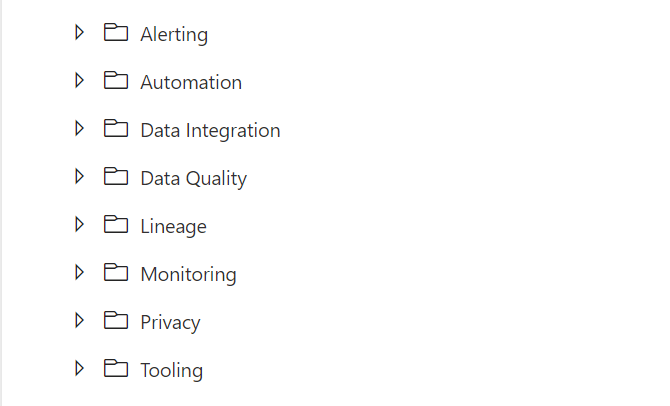
Once again these naming conventions are just suggestions. The most important thing is that you start using naming conventions and that you use the folder structure within the Pipelines (categories). Like the picture below as an example.

FolderStructure

If you have suggestions just let me know by leaving a comment below.

Exploring Azure Synapse Analytics Studio

Exploring Azure Synapse Analytics Studio

Azure Synapse Workspace Settings

In my previous article, I walked you through “how to create your Azure Synapse Analytics Workspace”. It’s now time to explore the brand new Synapse Studio.

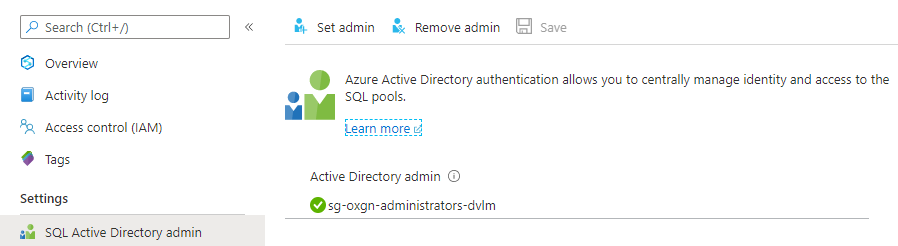
Most configuration and settings can be done through the Synapse Studio. In your Workspace you need to set the SQL Active Directory Admin, like you have to do for a Logical Server.

SQL Active Directory Admin

SQL Active Directory admin

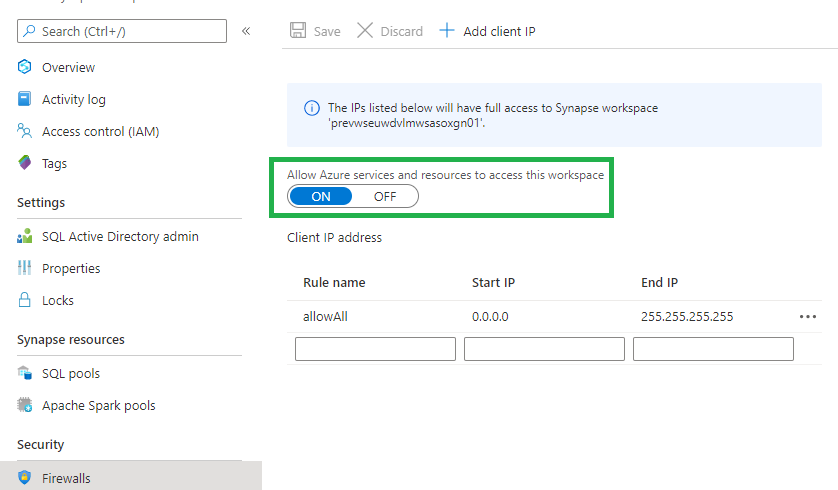
Firewall

Azure Synapse FIrewall

Change the IP-address to you own IP-address or to one of your employer if you work from the office. Make sure that you enable the option “Allow Azure service and Resources to access this Workspace” is enabled. Every trusted Azure Service or Resource can connect to this Workspace. Not all Public Preview Azure Services or Resources are Trusted yet.

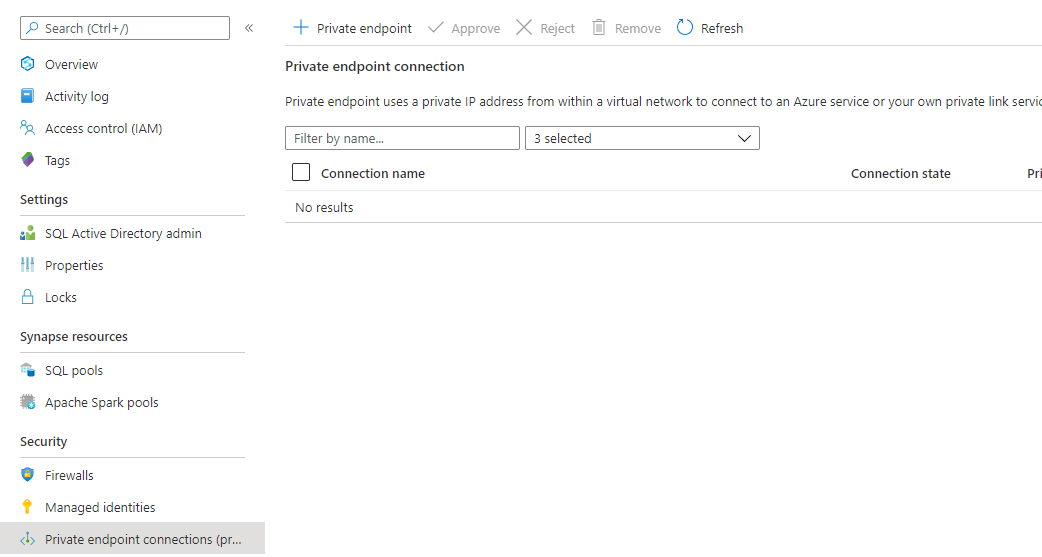
Private Endpoint Connections

Private Endpoint Connections

Define your Private Endpoint Connections to your Services to use a Private IP-address form your Virtual Network. More details on how to setup a Private Endpoint Connection can be found here.

Launch Azure Synapse Analytics Studio

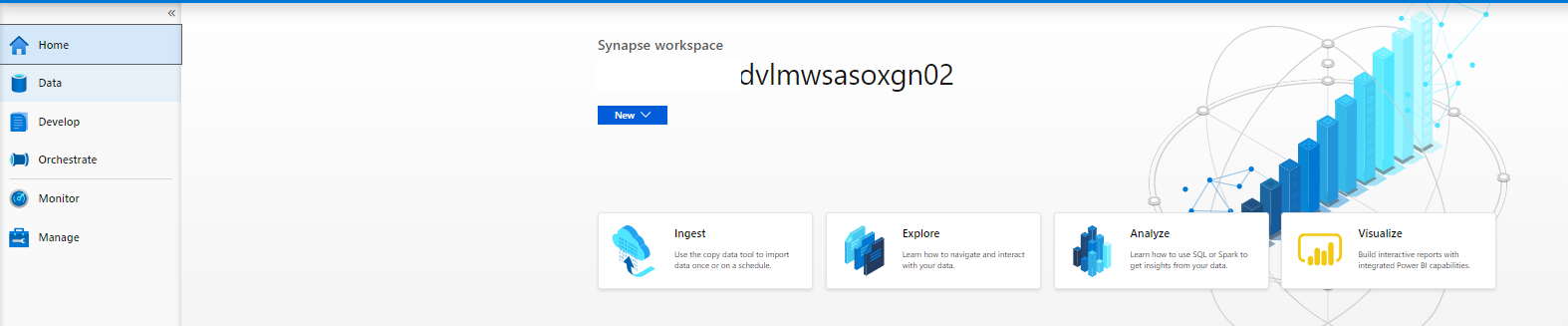
After you have opened the portal, the following screen will appear. Personally I am very charmed of this brand new Portal, you now get 1 place where you can access all your data. But also an integration with your Power BI reporting. But more about that later. Let’s walk through each tab below.

Azure Synapse Analytics Studio

Data

Azure Synapse Analytics Data Tab

The data Tab is Divided into 2 different parts Linked and Workspace

Linked

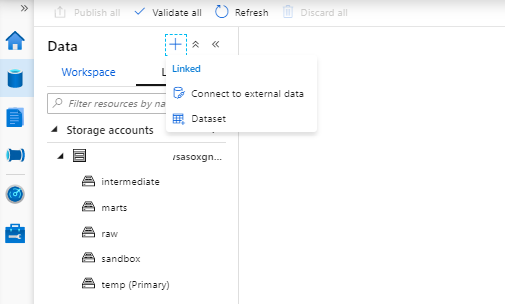
All Dataset likes you’re used to create in Azure Data Factory are stored here.

Azure Synapse Analytics Data Tab LInked

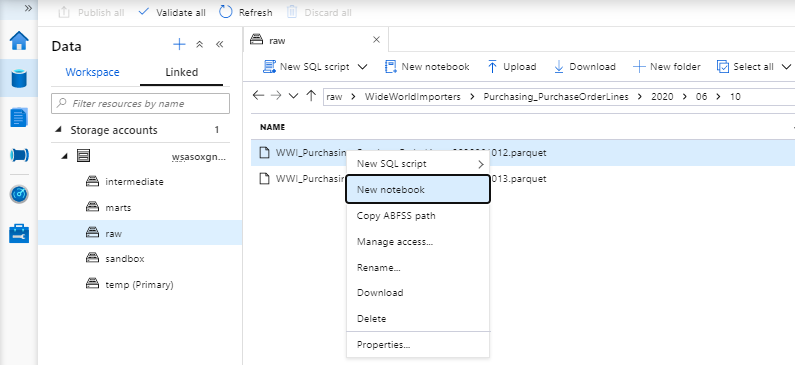
Your can now directly browse files within your Azure Data Lake Storage.

Azure Synapse Analytics Data Tab Linked to Browse Files

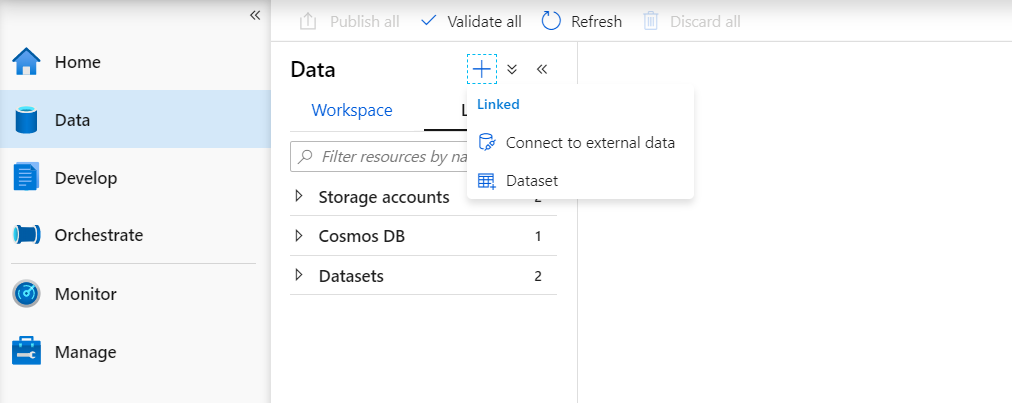
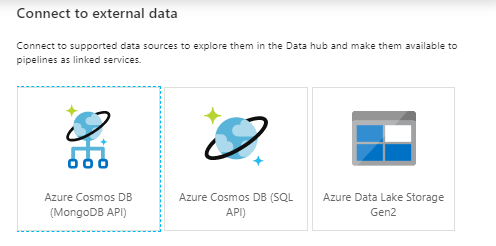
But you can also connect to External Data.

Connect to External Data

Workspace

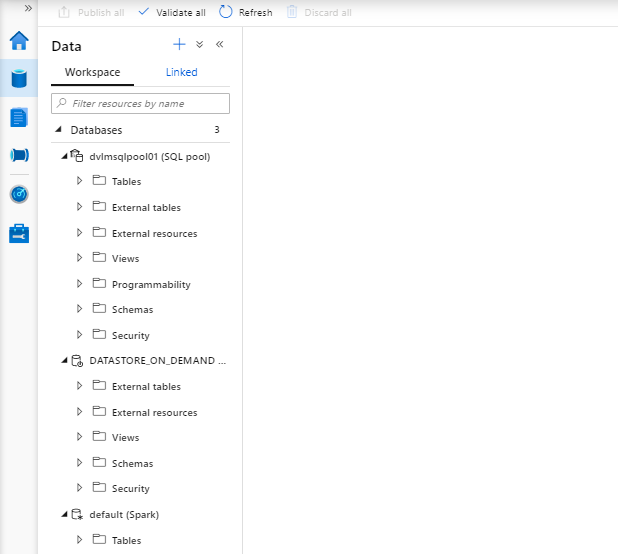
Here you will find all your databases which you have created with Sparks, SQL on Demand or SQL Pools. How to create these database I will explain later in another article.

Synapse Studio Data Workspace

Develop

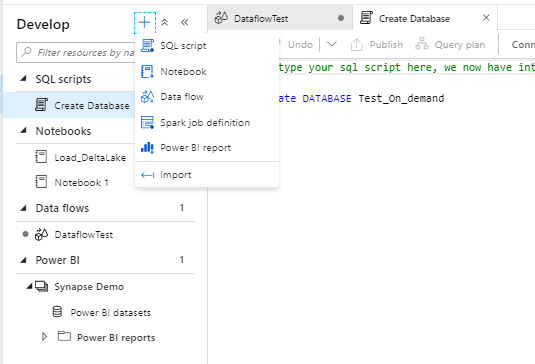
Azure Synapse Analytics Develop

The Develop tab, is the location, where your SQL Scripts, Notebooks, Dataflows, Spark Job Definitions and Power BI Reports are stored. In a later stage you can commit your work to Azure Dev Ops or GitHub.

Orchestrate

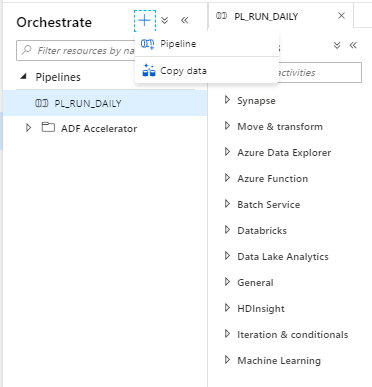
Azure Synapse Analytics Orchestrate

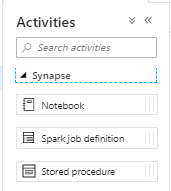
What do we see here , nothing more then you were used to see in Azure Data Factory except the addition of the Synapse Activities.

Azure Synapse Analytics Orchestrate Notebooks

Monitor

In the monitor tab you will find similar things to ADF except for the SQL requests and the Apache Spark Applications

Orchestration: Pipeline runs Overview of all Executed Pipelines
  Trigger Runs Overview of all Executed Trigger Runs
  Integration runtimes Overview of all created Integration Runtimes
Activities: Apache Spark applications Monitor your Apache Spark Executions
  SQL requests Monitor your SQL on Demand or SQL Pool queries

SQL request

All running(currently) SQl request for your SQL on Demand and your SQL Pools

Azure Synpase SQL Monitoring

Apache Spark Applications

All Apache Spark request.

Azure Synpase Apache Spark Monitoring

A detailed explanation of the Apache Spark Application monitor can be found here.

Management HUB

Azure Synapse Analytics Management Hub

The Synapse Analytics Management HUB offers the following options:

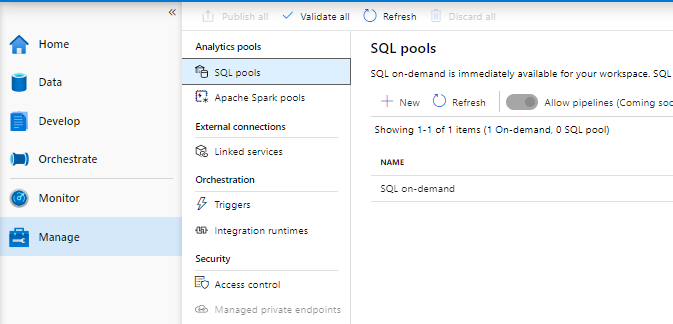
Analytic Pools: SQL pools Here  you can manage(Scale up or Down) your previously created SQL pools or create new ones.
  Apache Spark pools Create multiple instances of Spark pools depending on the workload requirements. Once you have your Instance created you also change Auto Scaling, Node Size and Number of Nodes from here.
External Connections: Linked Services Create and manage connections to different services, same as in Azure Data Factory
Orchestration: Triggers Create and manage Triggers for your Pipelines, same as in Azure Data Factory
  Integration runtimes Create and manage your different types of Integration Runtime:
Azure: execute workloads between Azure services or Azure Data Factory Mapping Data Flows.
Self-Hosted: execute workloads between on-premises environments and Azure.
Azure-SSIS: execute SQL Server Integration Services packages in Azure Data Factory.
Security: Access control Azure Synapse Analytics comes with role-based access control.
The available roles:
Workspace admin
Apache Spark admin
SQL admin
  Managed Private Endpoint Private link enables you to access Azure services from your Azure VNet securely.
More details on Managed Private Endpoints can be found here 


At the beginning of this article, I indicated that I was very charmed of this new Portal. Microsoft has ensured that we can now approach almost all our services seamlessly from 1 Portal and there will be much more to come in the future. And as you can see you don’t have to use the SQL Pools which is a reasonably expensive solution for customers who use a lot of data. But you can use Azure Synapse Analytics for almost every customer. I would say if you haven’t started trying Azure Synapse Analytics yet, start today and see how you can help your customers with this. If there are any questions I would like to hear them.

Thank you for reading.

Azure Synapse Analytics

Azure Synapse Analytics

Azure

by Erwin | Jun 15, 2020

Azure Synapse Analytics


Insights for all

Azure Synapse provides a breathtaking view of your data across data warehouses and big data analytics systems. Bringing these two worlds together into a single service is challenging as it requires unifying similar concepts that operate differently in each world such as security, privacy, and performance. With Azure Synapse, this seamless unification of data warehousing and big data not only simplifies a business’s analytics platform, but also breaks down silos that exist today because of teamsdata, and skills. (source Azure blog)

Azure Synapse Analytics Workspace

During Ignite 2019 we already saw the first announcement about Azure Synapse Analytics. The first Public Preview was announced during Build 2020.

Immediately after Build 2020, I started playing and exploring with Azure Synapse Analytics Workspace.
Fortunately, I was off for a few days and was able to use this free time to dive a little bit into Azure Synapse.

A few days later during the Analytics in a Day workshops that I gave for my employer InSpark in collaboration with Microsoft, I immediately took the time to give a Live demo. I found the inspiration for this Live demo during a YouTube session presented by Simon Whiteley.

For many participants it is more imaginative,  to walk through the product Live than to tell a story via PowerPoint Slides.

Upcoming Articles

In the coming days I will try to write a number of articles so that you become more familiar with the various possibilities of Azure Synapse Analytics.

I have the following articles in mind:

✅ Creating your Azure Synapse Analytics Workspace

✅ Exploring the new Azure Synapse Analytics Studio

Creating an Apache Spark Pool

Creating a SQL Pool

Integration with Power BI

And if you have more subject which needs to be explained feel free to leave them in the comments.

Happy reading!


Feel free to leave a comment